Alcantara River in September: Water Levels, Temperature, and Why Guides Recommend This Month
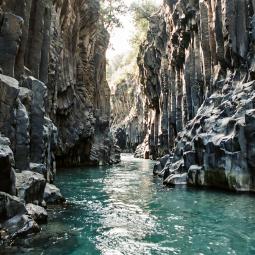
September changes the Alcantara River experience in a specific and practical way. The water temperature stays at 10–12°C — identical to August. The gorges are still open, the body rafting at the Gurne still runs, and the landscape is the same volcanic basalt canyon it is every month. What changes is everything around it: the crowds thin after the 15th when schools reopen, the gorges become accessible in the afternoon without queuing, and the pace of the day slows into something that feels closer to what this river is actually like.

In September, the Alcantara River maintains its year-round water temperature of 10–12°C. Body rafting at the Gurne dell'Alcantara continues through September, with sessions available at 10:00 and 11:00 — particularly after the 15th when the season scales back. Water levels at the Gurne are slightly lower than in August but remain sufficient for the full activity. After mid-September, when Italian schools reopen, visitor numbers at the Alcantara Gorges drop significantly, making afternoon visits to the gorges comfortable and crowd-free for the first time since June.
🌡 Water temperature: 10–12°C — stable year-round
🌊 Gurne water level: slightly lower than August, sufficient for body rafting
⏰ Body rafting sessions: 10:00 and 11:00 (especially after 15 September)
👥 Crowds: significantly lower after 15 September
🕐 Gorges: accessible in the afternoon without peak-hour crowds
✅ September recommended by guides
What Stays the Same — and What Doesn't
The Alcantara River in September is the same river as in August. The water originates on Etna's slopes, filters through volcanic basalt, and arrives at the gorge and the Gurne at 10–12°C regardless of the month. This does not change in September. Anyone expecting warmer water in autumn will be surprised — and the wetsuit remains mandatory for body rafting for exactly this reason.
The lava formations, the hexagonal basalt walls, and the geological character of the gorge are unchanged. The Gurne pools are still cold, still clear, and still fed by the same volcanic water source.
What changes is volume — both of water and of people.
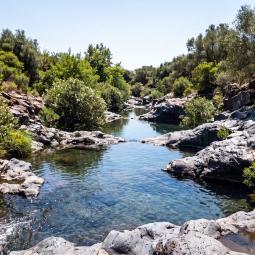
Water levels at the Gurne are slightly lower in September than in August. Summer rainfall is minimal in Sicily and the river runs on its winter reserves through the dry season. By September, those reserves have dropped from their August level. The difference is noticeable but not prohibitive — the pools remain deep enough for body rafting, the activity runs fully, and the experience is not diminished by the lower level.
For the full breakdown of water temperature and thermal shock risk, see our guide on Alcantara River temperature in August.
The crowd difference is more significant.
After the 15th: What Happens When Schools Reopen
August at the Alcantara Gorges means coaches, queues, and a canyon floor shared with hundreds of other visitors between 11:00 and 17:00. The peak hour problem that makes morning visits essential in August disappears almost entirely after the 15th of September.
Italian schools reopen in mid-September. Families with children — the demographic that drives the August domestic tourism peak — return home within days. The coach traffic that fills the gorge entrance car park in August drops sharply. The queue for the elevator shortens. The canyon floor has space.
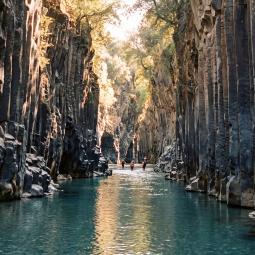
The practical consequence: in September, the Alcantara Gorges become accessible in the afternoon. A visit at 14:00 or 15:00 in September looks nothing like the same visit in August. The basalt walls, the water, and the geological formation are identical. The experience of being inside the gorge — the sound, the space, the pace — is completely different.
For visitors who want to combine body rafting at the Gurne in the morning with a gorge visit in the afternoon, September after the 15th is the month where this combination works most comfortably. Five minutes between the two sites, afternoon gorge visit without the August pressure, and the same cold water waiting at both.
For the full guide on combining both sites in one day, see our article on Alcantara Gorges vs Lakes (Gurne).
Body Rafting at the Gurne in September: What to Know
Body rafting at the Gurne continues through September. The activity runs, the equipment is the same, and the cold water experience is unchanged from August. Two practical points are worth knowing for September bookings.
Sessions: 10:00 and 11:00 only
As the season scales back after the 15th, available departure times reduce. September body rafting — particularly in the second half of the month — runs at 10:00 and 11:00. Later afternoon sessions are not available. Booking around these times is the correct approach for a September visit.
Water level: slightly lower, fully functional
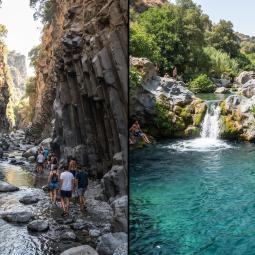
The Gurne pools in September are slightly lower than their August level. The difference is visible — the waterline on the basalt rock is lower, the natural waterslide has less volume. The cliff jumps remain available at up to 6 metres depending on conditions. The activity runs at full capacity within the seasonal parameters.
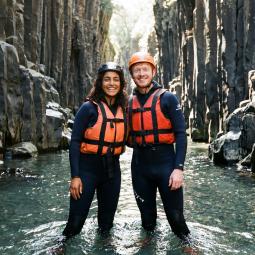
The water temperature stays at 10–12°C. The wetsuit, helmet, life jacket and water shoes provided by Sicily Active are the same as every other month. The thermal shock risk on entry applies in September as in August — gradual entry remains the correct protocol regardless of the air temperature outside, which in September has dropped to a more comfortable 25–27°C at the valley floor.
For a full overview of all Alcantara activities, visit our Alcantara Gorges page.
Why Guides Recommend September
The recommendation for September comes from a straightforward observation: the river is quieter, the gorge is accessible in the afternoon, and the experience of both sites is closer to what they actually are without the August crowd overlay.
The body rafting at the Gurne in September runs in smaller, more relaxed groups. The guide can move at a pace that fits the group rather than managing the logistics of peak-season volume. The gorge visit, without the afternoon crowd, offers the geological experience the site is designed to provide.
The air temperature in September — around 25–27°C at the valley floor — means the contrast between the 10–12°C water and the outside world is slightly less extreme than August's 35–40°C. The cold water is still very cold. But arriving at the river from a 25°C morning rather than a 38°C one changes the physical experience of the day in ways that most visitors notice immediately.
September is also the month when the Alcantara valley itself — the full 52 kilometres from Randazzo down to Giardini Naxos — shows its autumn character. The vineyards on the slopes are in or just past harvest. The light is different. The pace of the valley is slower. None of this is part of the body rafting activity itself, but it frames the day in a way that August cannot.
FAQ
Is the water warm in September at Alcantara?
No. The Alcantara River stays at 10–12°C year-round. September does not change the water temperature. The wetsuit provided for body rafting participants manages the thermal difference effectively.
Are the Alcantara Gorges less crowded in September?
Yes — significantly, particularly after the 15th when Italian schools reopen. The afternoon peak-hour crowds that fill the gorge entrance in August drop sharply after mid-September, making afternoon visits comfortable and queue-free.
What times is body rafting available in September?
Sessions run at 10:00 and 11:00, particularly in the second half of September as the season scales back. Afternoon sessions are not available in late September.
Is the water level lower in September than August?
Slightly, yes. The Gurne pools are at a lower level than their August maximum. The activity runs fully and the cliff jumps remain available — the lower level is noticeable but does not affect the core experience.
Can I visit the Alcantara Gorges in the afternoon in September?
Yes. After mid-September, the afternoon crowds that make this inadvisable in August are no longer present. A 14:00 or 15:00 gorge visit in late September is comfortable and significantly less busy than any equivalent August visit.
Is thermal shock still a risk in September?
Yes. The water is 10–12°C regardless of season. In September, air temperatures at the valley floor are around 25–27°C — cooler than August, but the gap between air and water remains significant. Gradual water entry is the correct protocol in September as in every other month.
SAFETY MODULE
The Alcantara River maintains a water temperature of 10–12°C year-round. In September, external air temperatures at the valley floor average 25–27°C. The temperature differential between air and water creates a thermal shock risk — gradual water entry is mandatory on all Sicily Active body rafting sessions. Wetsuits, helmets, life jackets and water shoes are provided and mandatory. The cliff jumps at the Gurne are available up to 6 metres depending on water level — they are optional and a pedestrian alternative is always available. The Alcantara Gorges close at 19:00.
September at the Alcantara River is the same cold water, the same volcanic basalt, and the same body rafting at the Gurne — with one significant difference. After the 15th, the crowd that defines August disappears with the school calendar, and both sites become accessible in a way they are not for most of the summer. Morning body rafting at the Gurne, afternoon visit to the gorge without queuing — September is the month this combination works most naturally. Book the morning session before the available slots fill.