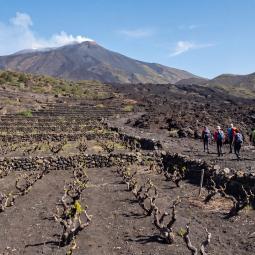
Etna Trekking in July and August: Summer Storms, Lightning Risk on Lava Fields and What to Wear
Summer on Etna means heat at the base and unpredictable conditions at altitude. A July morning that starts clear can produce a thunderstorm by mid-morning — sometimes with little visible warning from below. The lava fields that cover Etna's slopes are not neutral terrain in a storm. The volcanic rock is rich in iron minerals that interact with electrical fields. Knowing what to wear, what to carry, and how guides manage these conditions is not optional information for anyone planning a summer Etna visit.

Summer thunderstorms on Mount Etna are unpredictable and can develop at any time of day. Etna's lava fields — locally called sciare — are rich in iron-bearing minerals including magnetite and hematite, which create elevated lightning risk compared to ordinary mountain terrain. A complete change of dry clothing including underwear is recommended in addition to waterproof outer layers. Gore-Tex or waterproof footwear is essential. Sicily Active monitors weather conditions before every departure and adjusts or cancels tours when necessary.
RECAP
⛈ Summer storms: unpredictable — can develop at any hour
🌋 Lava field risk: high iron mineral content — elevated lightning conductivity
👕 Essential kit: waterproof jacket + full dry change including underwear
👟 Footwear: closed shoes with Gore-Tex membrane
📡 Sicily Active: weather monitoring before every tour — cancellations rare but applied when necessary
Why Summer Storms on Etna Are Different From Ordinary Mountain Weather
Etna sits at over 3,300 metres at the summit and generates its own micro-climate. In July and August, the combination of solar heating on dark volcanic rock, high altitude, and Mediterranean atmospheric instability creates conditions where storms can develop rapidly and with limited advance warning visible from the coast below.
Unlike alpine environments where afternoon storms follow a predictable pattern, Etna's summer storms are not reliably timed. A clear sky at 09:00 does not guarantee clear conditions at 13:00. The unpredictability is not a marginal risk — it is the defining characteristic of summer weather on the volcano.
This matters for planning. Checking the forecast the evening before is useful. Assuming the morning forecast holds for the full day is not.
For all available Etna tours departing from Taormina, visit our Etna Excursions page.
The Lava Fields: Why Etna's Terrain Amplifies Lightning Risk
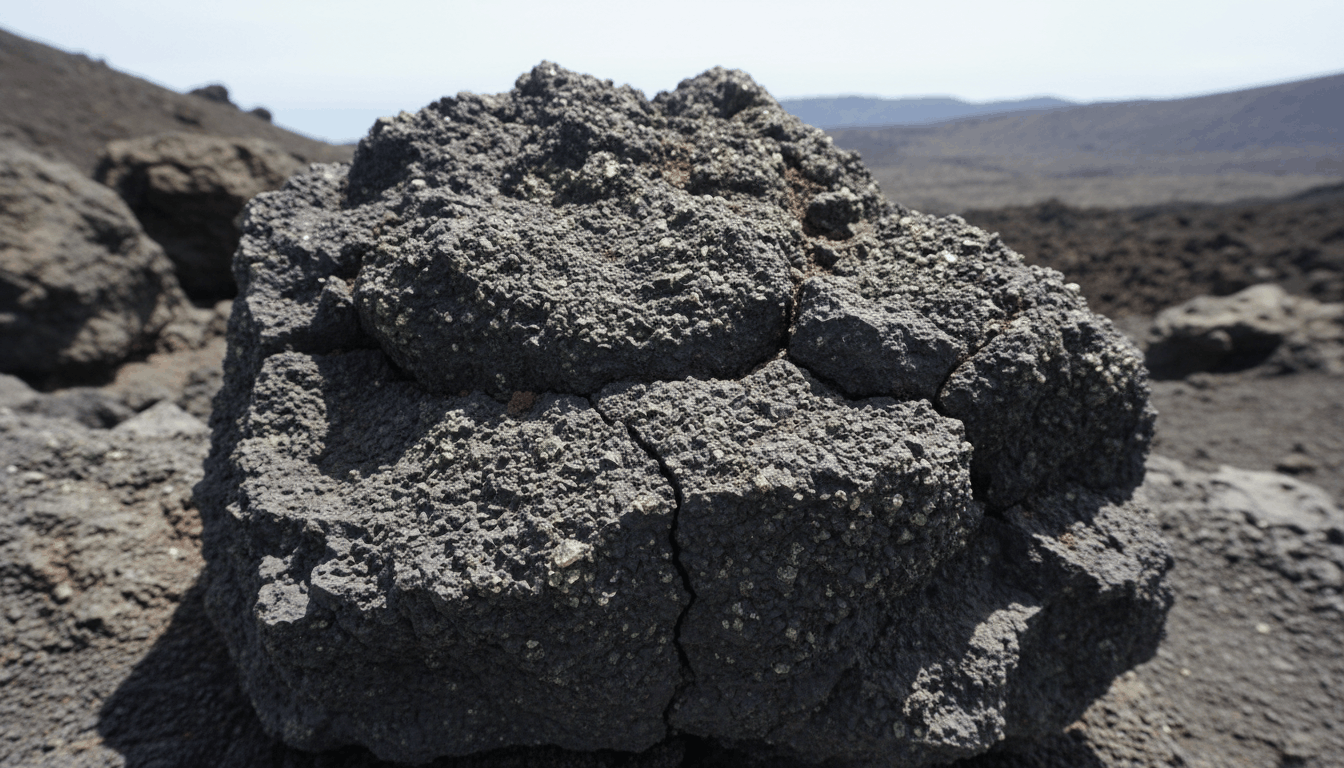
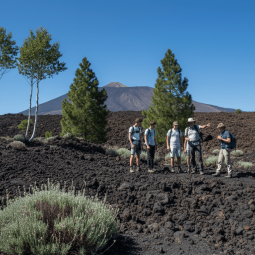
The lava fields that cover Etna's slopes — known locally as sciare — are not ordinary rock. Etna's lavas are exceptionally rich in iron-bearing minerals: magnetite (Fe₃O₄), hematite, olivine, and pyroxenes. Scientific analysis of Etna's volcanic rock consistently identifies high concentrations of ferromagnesian minerals, with iron content representing a significant proportion of the rock's composition.
Magnetite in particular is a ferromagnetic mineral with measurable electrical conductivity. Research published in peer-reviewed volcanological journals confirms that volcanic rocks rich in magnetite interact with electrical discharge — lightning strikes alter the magnetic properties of the rock itself, a phenomenon documented across multiple volcanic regions worldwide.
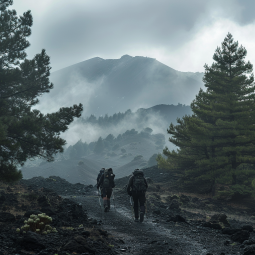
In practical terms: crossing an open lava field during a thunderstorm on Etna carries a higher risk than crossing ordinary mountain terrain of equivalent altitude. The iron mineral content of the sciare creates local electromagnetic conditions that differ from limestone, granite, or soil-based terrain.
This is not a theoretical risk. It is the reason why abandoning an exposed lava field crossing is the correct response when a storm develops overhead — not sheltering under rock formations, which concentrate rather than dissipate the risk.
What to Wear: The Full Kit for a Summer Etna Tour
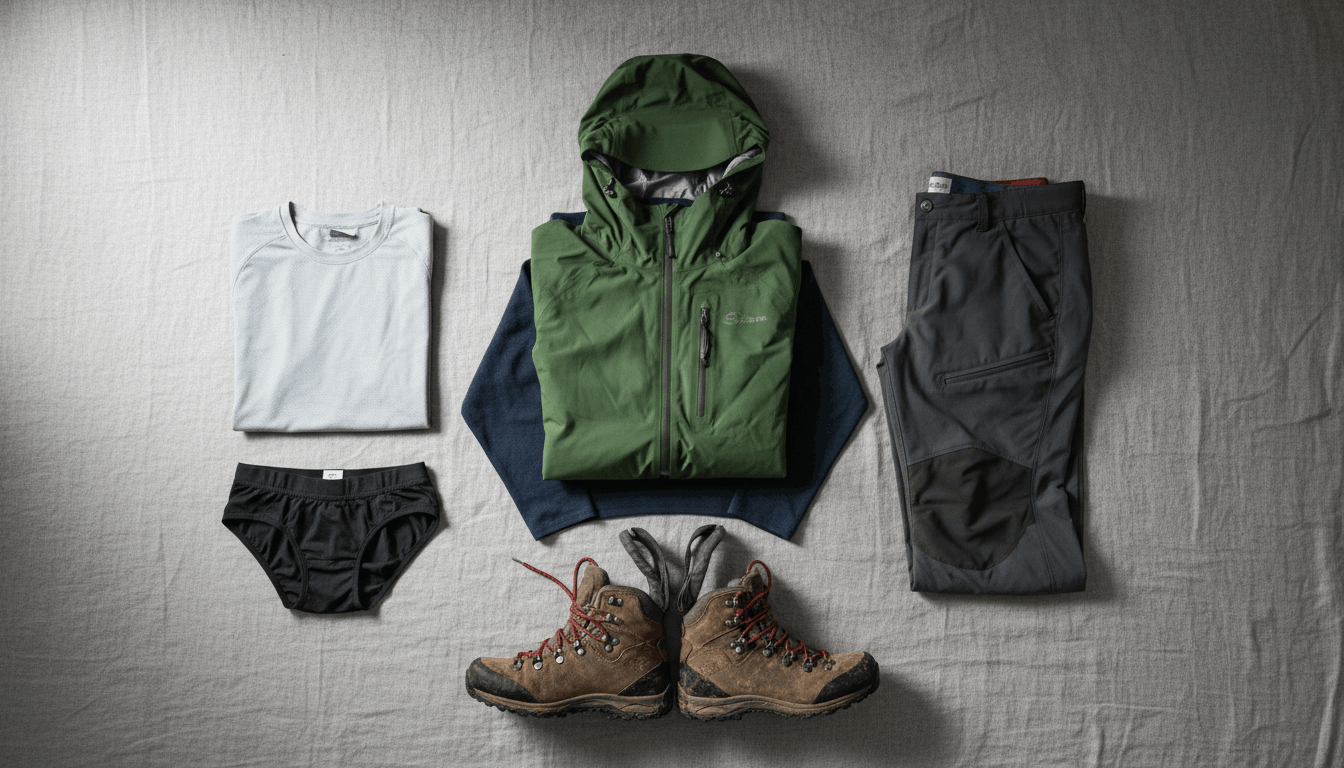
Clothing for a summer Etna tour needs to manage two opposite conditions in the same day: heat at the base and the possibility of cold, wet conditions at altitude.
Outer layer — waterproof jacket
A waterproof and windproof jacket is non-negotiable for any Etna tour in July and August. The jacket needs to be genuinely waterproof — not water-resistant. In a summer storm at 1,700–1,900 metres, a water-resistant layer saturates within minutes. A Gore-Tex or equivalent membrane jacket remains functional.
The complete dry change — including underwear
This is the item most visitors forget. If a storm hits and clothing becomes wet at altitude, the combination of wind and temperature drop creates a rapid cooling effect regardless of air temperature below. A complete change of dry clothing — t-shirt, base layer, and underwear — carried in a waterproof bag inside the pack allows full re-dressing if the outer layers are saturated. Wet underwear against the skin in cold wind is a significant discomfort that becomes a risk over time. Dry clothing is the solution.
Mid layer
A light fleece or thermal mid layer adds insulation without bulk. Temperature at 1,900 metres in July averages 24–26°C in clear conditions and drops significantly in wind and rain.
Footwear
Closed shoes with a Gore-Tex or waterproof membrane. The lava terrain on Etna's north side is uneven, abrasive, and becomes slippery when wet. Trail runners with a waterproof membrane are suitable. Standard trainers or open shoes are not.
Base layer
A moisture-wicking base layer that dries quickly. Cotton holds moisture — avoid it. Synthetic or merino wool base layers manage sweat and dry faster if conditions change.
For the complete Etna clothing guide covering all seasons and altitudes, see our detailed guide on what to wear on Mount Etna.
How Sicily Active Manages Weather — and What Happens When Conditions Change
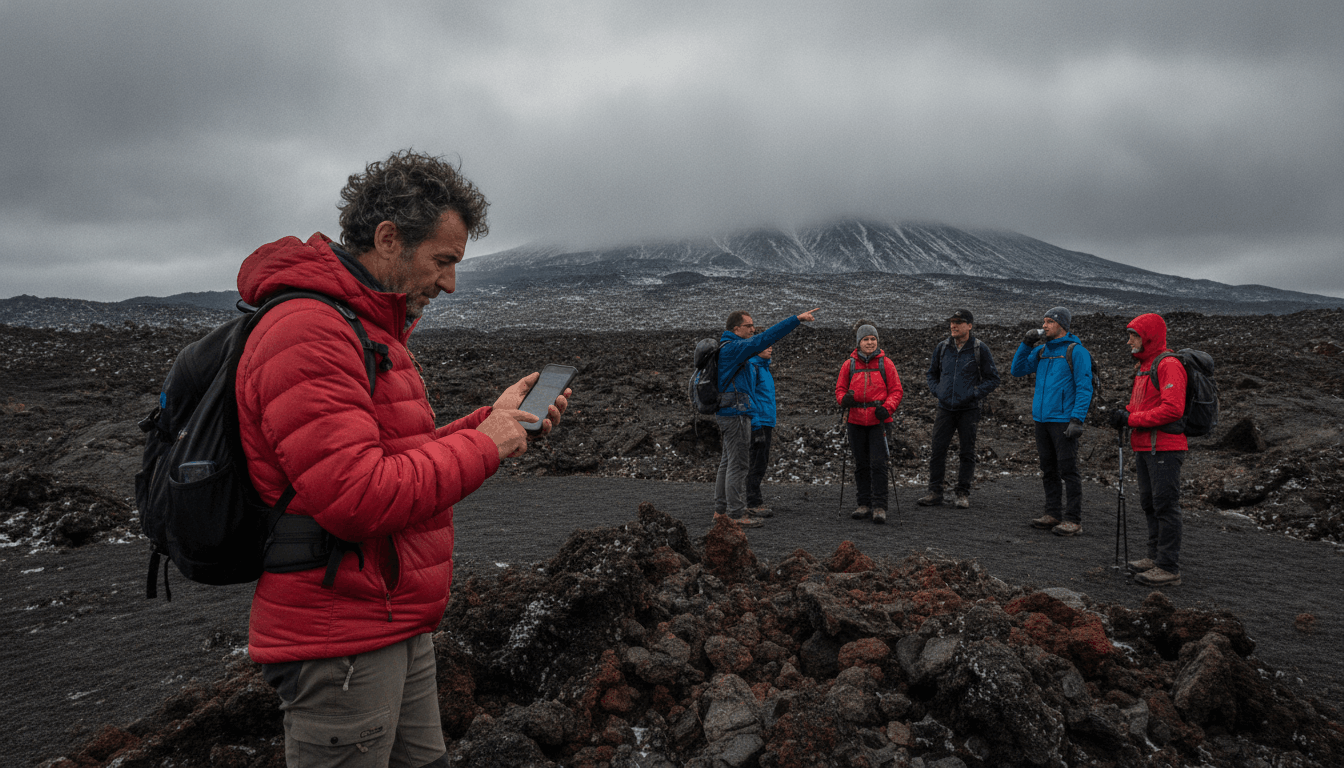
Sicily Active monitors weather conditions before every tour departure. The guide checks forecasts for the specific altitude range of the tour — not just the coastal forecast, which does not reflect conditions at 1,700–1,900 metres.
When conditions are unfavourable, the guide adjusts the itinerary or, in cases where safety requires it, cancels the departure. Cancellations are rare — the majority of summer tours run without incident. But the protocol exists and is applied consistently. A tour that begins in clear conditions and encounters developing storm activity mid-route is managed by the guide, who determines the correct response on the ground.
The correct response on Etna when a thunderstorm develops overhead is to move off exposed lava fields immediately and descend to a sheltered position. Continuing across open sciare during active lightning activity is not a judgement call — it is the wrong decision regardless of how far the group is from the route endpoint.
This is why guides exist. Not to carry bags, but to read the mountain.
The Practical Checklist: What to Pack for a July or August Etna Tour
A checklist for the pack — not the suitcase:
Must have:
- ✅ Waterproof jacket (Gore-Tex or equivalent membrane)
- ✅ Complete dry change of clothes — t-shirt, base layer, underwear — in a waterproof bag
- ✅ Closed shoes with waterproof membrane (Gore-Tex trail shoes or equivalent)
- ✅ Light fleece or thermal mid layer
- ✅ Sun protection — hat, sunscreen, sunglasses
- ✅ Water — minimum 1.5 litres per person
- ✅ Small backpack to carry the above
Do not bring:
- ❌ Cotton clothing as base layer — holds moisture, does not dry
- ❌ Open shoes or sandals — unsuitable on lava terrain in any conditions
- ❌ Water-resistant but not waterproof jacket — insufficient in a summer storm
- ❌ Valuables that cannot be protected from rain
Leave at the hotel:
- Everything not on the list above
FAQ
Are summer storms on Etna common in July and August?
They are possible on any summer day and unpredictable in timing. A clear morning does not guarantee clear conditions throughout the day at altitude. Sicily Active monitors conditions before every departure.
Why is Etna's terrain specifically riskier during lightning?
Etna's lava fields are rich in iron-bearing minerals — particularly magnetite — which have measurable electromagnetic properties. Scientific research confirms that volcanic rock with high iron content interacts with electrical discharge differently from ordinary mountain terrain. Crossing open lava fields during active lightning is higher risk than equivalent exposure on other mountain types.
Why do I need a complete change of clothes including underwear?
If outer layers become saturated in a storm, wet clothing at altitude combined with wind creates rapid cooling. A complete dry change — including underwear — allows full re-dressing if needed. It is the single most underrated item in a summer Etna kit.
What footwear is correct for Etna in summer?
Closed shoes with a Gore-Tex or waterproof membrane. Lava terrain is uneven and abrasive in dry conditions and slippery when wet. Open shoes and standard trainers without waterproofing are not suitable.
Does Sicily Active cancel tours for weather?
Rarely, but yes. Weather conditions are assessed before every departure at the specific altitude of the tour. When safety requires it, the departure is cancelled or the itinerary is adjusted. The guide makes the final call on the mountain.
Can I check the weather myself before the tour?
Yes, but check the forecast for Etna's north side at altitude — not the coastal forecast for Taormina or Catania. The two can differ significantly on the same day.
SAFETY MODULE
Mount Etna is an active volcano with unpredictable summer weather. Thunderstorms can develop rapidly at altitude without clear advance warning from the coast. Etna's lava fields contain high concentrations of iron-bearing minerals including magnetite, which create elevated lightning risk compared to ordinary mountain terrain. During active lightning, the correct response is to move off exposed lava fields immediately and seek lower, sheltered ground. Do not shelter under isolated rock formations or crater walls. The guide leads all weather-related decisions on the mountain. Waterproof clothing and a complete dry change are required kit for any summer Etna tour.
CONCLUSION
Summer on Etna is not a guaranteed clear-sky experience. The lava fields are beautiful and geologically extraordinary — they are also high-altitude open terrain rich in iron minerals during a period of atmospheric instability. Wearing the right kit, carrying a dry change, and trusting the guide's weather assessment are the three things that determine whether a summer storm on Etna is an inconvenience or a risk. Preparation takes five minutes at the hotel. The alternative takes longer to recover from