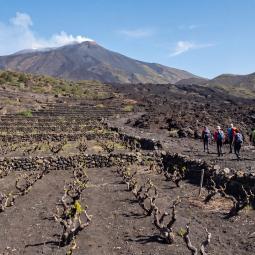
Etna Wine Harvest Season (September): Visiting Working Wineries — Can You Really Participate?
September on Etna's slopes is harvest season. The vineyards that sit between 300 and 900 metres altitude — where Nerello Mascalese, Carricante, Chardonnay and Pinot Noir grow in volcanic basalt soil — reach the end of their growing cycle and the grape picking begins. For visitors arriving in September, the question is a natural one: can you actually see the harvest? The honest answer is yes — if your visit coincides with the picking and you have booked in advance.

September is harvest season on Mount Etna's slopes. Wineries at lower altitudes (around 300 metres) harvest earlier in the month; those at higher altitudes (around 900 metres) harvest later. Visitors on the Etna wine tour can witness active harvesting and winery processing if their visit coincides with the harvest period and they have booked in advance. The tour itinerary is identical to other months — the harvest adds a seasonal layer to the winery visit that is specific to September.
RECAP
🍇 Harvest period: September — timing varies by altitude
📍 Lower altitude (~300m): harvest earlier in September
📍 Higher altitude (~900m): harvest later in September
👀 Visitor participation: observation — not active picking
✅ Condition: advance booking + coincidence with harvest dates
📋 Tour itinerary: identical to other months
How Harvest Season Works on Etna — and Why Altitude Changes Everything
Etna's vineyards do not harvest at the same time. The volcano creates a vertical range of growing conditions — from 300 metres above sea level near the valley floor to 900 metres and above on the higher slopes — and each altitude band has its own harvest window.
Wineries at lower altitudes harvest earlier in September. The grapes at 300 metres ripen faster because the growing season is warmer and longer at that elevation. As altitude increases, temperatures drop, the growing season extends, and the harvest moves later into the month.
This means that September on Etna is not a single harvest event — it is a rolling process that moves up the slopes through the month. A visitor arriving in the first week of September may find active picking at a lower-altitude winery while the higher estates are still waiting. A visitor arriving in the last week of September may find the lower wineries already in processing while the harvest on the upper slopes is underway.
For a wine tour that includes a winery visit, this variability is what makes September and October genuinely interesting — and what requires a booking made in advance to align the visit with the right estate at the right moment.
For more on Etna's wine varieties and what makes volcanic terroir distinctive, see our guide on Etna wine vs mainland Italy.
What "Participating" in the Harvest Actually Means
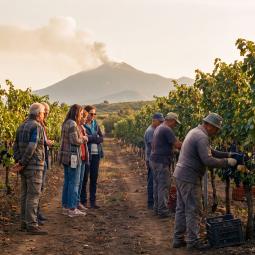
The word "participate" needs a direct definition. Visitors do not join the harvest crew — the picking and processing are skilled operations run by the winery's own team. What visitors can do, when the timing aligns, is observe the full harvest process from inside the estate.
This means watching the grape picking in the vineyard, following the fruit into the winery, and seeing the first stages of processing — sorting, crushing, and the beginning of fermentation. The guide explains what is happening at each stage. The winery team continues their work. The visit is an observation, not an intervention.
For anyone with a genuine interest in wine production, this is a significantly more engaging experience than a tasting-only visit. The difference between tasting a finished Nerello Mascalese and watching the grapes that will become next year's vintage arrive at the winery is a difference in understanding, not just experience.
The standard tasting of four Etna DOC wines and the Sicilian lunch are included regardless of whether the harvest is active on the day of the visit. The harvest observation is an addition — available when the timing works, not a replacement for the core itinerary.
For a complete overview of Etna's wine region, its DOC structure and the varieties grown on the volcano's slopes, see our Etna Wine Region Guide.
The Tour Itinerary in September: What Stays the Same
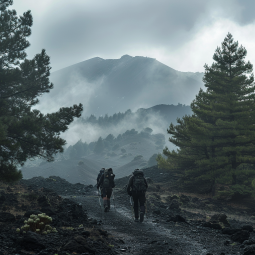
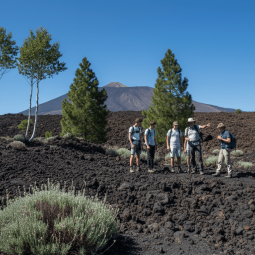
The Etna wine tour itinerary is identical in September to every other month of the season. The morning walk to the Sartorius craters at 1,700 metres, the lava cave visit, and the afternoon winery tasting with Sicilian lunch all run as standard.
What September adds is context. The 60-minute walk to the craters takes place at approximately 18–20°C — cooler than the August equivalent and physically more comfortable. The lava cave visit follows. The drive to the winery in the afternoon passes through vineyards that in September are visibly at the end of their cycle — heavy with ripe fruit or already post-picking, depending on the altitude and the week.
The tasting at the winery covers four Etna DOC labels with a Sicilian lunch, as in every other month. In September, the guide can add context about the specific vintage in progress — what the season has produced, how the harvest is developing, what the winemaker expects from the year's fruit.
For visitors who want the wine tour at its most seasonally specific, September is the correct month. The itinerary does not change. The meaning of the winery visit does.
How to Book for the Harvest — and What to Confirm in Advance
The harvest observation requires two conditions to be in place: advance booking and a visit date that coincides with active harvesting at the specific winery included in the tour.
Neither condition can be guaranteed last minute. The harvest timing depends on the season's weather — a cooler year delays the harvest, a warmer year advances it. The winery confirms active picking dates as the season develops, not months in advance.
The practical approach: book the September wine tour as early as possible and communicate your preferred dates. Sicily Active can advise on which week is most likely to coincide with harvest activity based on the season's development. The earlier the booking, the more flexibility there is to align the visit with the harvest window.
If your visit falls outside the active picking period, the winery visit and tasting are unchanged — September's post-harvest estates have their own seasonal character, and the processing period that follows picking is equally interesting for anyone who wants to understand what happens between the vineyard and the bottle.
For the full wine tour itinerary and details, see our guide on Mount Etna wine tasting while touring.
Etna Wine tour in September
How to Book for the Harvest
4 Etna DOC Wines · Sicilian Lunch · Morning Walk on the Volcano · September Harvest
FAQ
Can I actually pick grapes during the harvest visit?
No. The harvest is run by the winery's own team. Visitors observe the picking and processing — sorting, crushing, early fermentation — with the guide explaining each stage. It is an observation, not active participation.
Is the harvest guaranteed to be active during my visit?
No. The harvest timing depends on altitude and the season's weather. Lower-altitude wineries harvest earlier in September; higher-altitude estates harvest later. Booking early allows Sicily Active to advise on the most likely window for your preferred dates.
Does the tour itinerary change in September?
No. The morning walk to the Sartorius craters, lava cave visit, and afternoon winery tasting with Sicilian lunch are identical to every other month. September adds harvest context to the winery visit when timing aligns.
What if my visit doesn't coincide with the active harvest?
The tasting of four Etna DOC wines and Sicilian lunch are included regardless. A post-harvest winery visit in late September has its own character — the processing period, fermentation, and the winemaker's assessment of the vintage are all visible and explained during the visit.
How many wines are included in the tasting?
Four Etna DOC labels, paired with a Sicilian lunch. This is standard across all months.
What is the temperature on Etna in September for the morning walk?
Approximately 18–20°C at tour altitude — cooler and more comfortable than August. Light layers and closed shoes are sufficient. A windproof jacket is useful for the higher sections of the route.
SAFETY MODULE
Mount Etna is an active volcano. The wine tour morning walk takes place at approximately 1,700 metres altitude. September temperatures at this altitude average 18–20°C — a windproof jacket is recommended. Closed footwear is required for the lava terrain section and the lava cave visit. Tour availability is confirmed on the day based on volcanic and weather conditions. The winery visit is conducted on private estate property — the guide leads the group throughout.
CONCLUSION
September is the only month when an Etna wine tour visit coincides with the harvest cycle. The itinerary is the same as every other month — the morning walk, the lava cave, the tasting and lunch. What changes is the winery itself: active in a way that no other season produces, with fruit arriving from the vineyard and the first stages of a new vintage beginning. Booking early gives the best chance of aligning the visit with the harvest window. Whether the harvest is active or not, September on Etna's slopes offers a version of the wine tour that the other months cannot replicate.