Is the Alcantara River Too Challenging for First-Time Body Rafting?
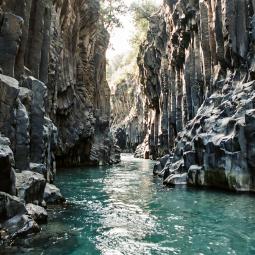
Body rafting in Sicily often raises one key concern: is the Alcantara River too cold, too strong, or too technical for beginners? The activity takes place inside a volcanic canyon shaped by basalt lava flows. Water flows through narrow sections, natural pools and mild rapids. For first-time participants, understanding the real river conditions is more important than understanding the tour itself. This guide explains what beginners should realistically expect before entering the Gurne dell’Alcantara.

Overview
The Alcantara River is generally suitable for first-time body rafting participants with basic swimming ability and moderate fitness. The water is cold (around 10–15°C in spring), currents are mild to moderate, and jumps are optional. The main challenge is temperature and confidence, not technical difficulty.
What Actually Makes the Alcantara River Challenging?
🌡 Water Temperature
Cold for most of the year (10–18°C). Initial immersion is the main shock factor.
🌊 Current Strength
Generally mild to moderate. Stronger after rainfall.
🪨 Volcanic Terrain
Basalt rocks can be uneven and slippery.
🏊 Swimming Requirement
Basic swimming ability is necessary. No advanced skills required.
🧠 Psychological Factor
Cold water and narrow canyon walls may feel intimidating at first.
The Real River Conditions in the Gurne dell’Alcantara
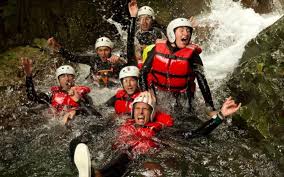
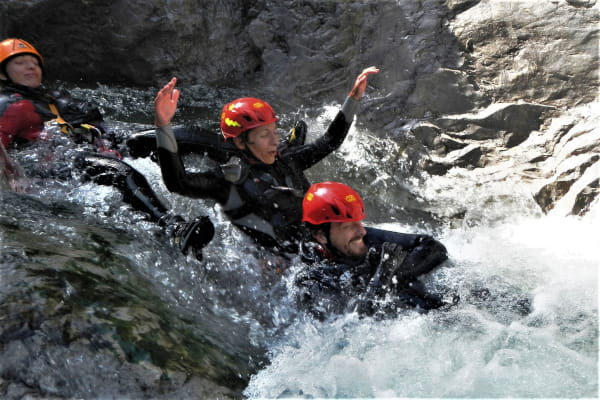
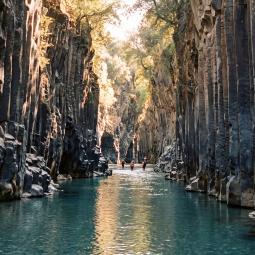
The Alcantara River flows through basalt formations created by ancient lava entering the valley. These geometric rock walls create narrow passages and natural pools known locally as the Gurne.
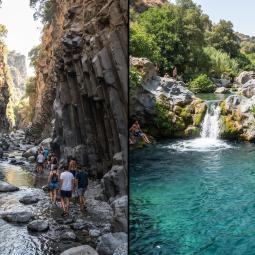
The current is not constant. Some sections are calm, while others create mild turbulence due to uneven volcanic rock formations.
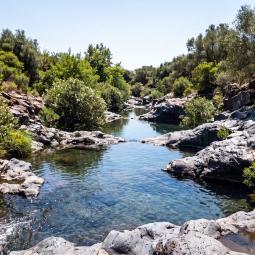
Water depth varies between shallow walking areas and pools deep enough for controlled jumps.
Takeaways
-
The environment is volcanic, not artificial.
-
Rapids are natural but not extreme.
-
The terrain requires balance and awareness.
Is the Water Too Cold for Beginners?
The Alcantara River is fed by mountain sources and underground springs. Water temperature in spring can range between 10 and 15°C. In summer, it can reach 16–18°C.
For many beginners, cold exposure is the main psychological barrier.
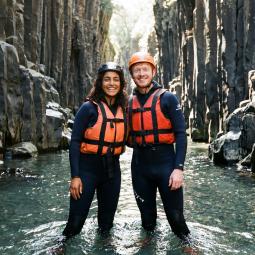
A wetsuit significantly reduces discomfort, but the initial immersion feels intense for the first minutes.
After adaptation, most participants adjust quickly.
Takeaways
-
Cold is the primary challenge, not difficulty.
-
The sensation improves after initial immersion.
-
Short exposure periods reduce discomfort.
How Strong Is the Current?
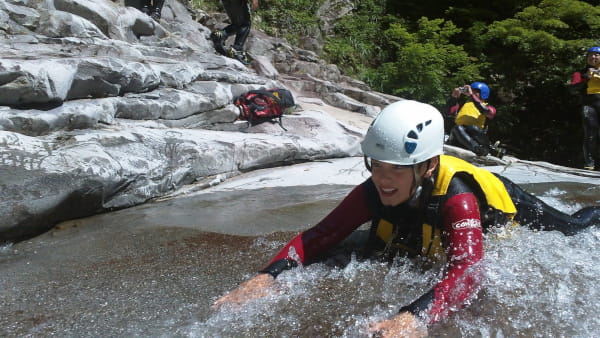
The current inside the Gurne section is generally mild to moderate. It increases slightly after rainfall or seasonal water changes.
The descent follows the natural flow downstream. Participants move with the current, not against it.
There are no high-volume white-water sections typical of rafting rivers.
For a geological overview of how the river shapes the canyon, see our detailed guide to the Alcantara River
Takeaways
-
Current supports movement.
-
No advanced paddling skills required.
-
Conditions depend on seasonal water flow.
Do You Need to Be Athletic?
Body rafting requires moderate physical condition and basic swimming ability.
You should be comfortable:
-
Floating on your back
-
Moving in flowing water
-
Climbing short volcanic rock sections
You do not need upper body strength or rafting experience.
People who struggle most are not beginners — but those uncomfortable in cold water or anxious in natural environments.
Takeaways
-
Basic swimming is sufficient.
-
Athletic training is not required.
-
Confidence matters more than strength.
Who Should Reconsider?
The activity may not be suitable for:
-
Individuals with strong fear of cold water
-
Non-swimmers
-
Those with knee or mobility limitations
-
People uncomfortable in narrow canyon spaces
For most active adults and teenagers, the challenge is manageable.
Decision Framework for First-Timers
Ask yourself:
-
Can I swim confidently in a pool?
-
Am I comfortable entering cold water?
-
Can I walk on uneven terrain?
-
Do I prefer natural environments over controlled pools?
If the answer is yes to at least three, the Alcantara River is unlikely to feel overwhelming.
If cold water is your main concern, summer months provide milder conditions.
FAQ
Is the Alcantara River dangerous for beginners?
The river in the Gurne section is generally mild. With supervision and proper equipment, it is considered manageable for beginners with basic swimming skills.
Are the jumps mandatory?
No. Natural pool entries are optional, and alternative passages exist along the route.
Is it harder than river trekking?
Body rafting involves more immersion and downstream movement. River trekking includes more walking and less current interaction.
What is the most difficult part for beginners?
The initial cold-water immersion is typically the biggest challenge.
Can teenagers participate?
Active teenagers meeting height and swimming requirements generally adapt well to the river conditions.
Safety Considerations
Weather changes can affect water flow. After heavy rain, current intensity may increase. Always verify conditions and follow guide instructions inside volcanic canyon environments.
Basalt rock surfaces can be slippery. Controlled movement and proper footwear are essential.
Final Evaluation
The Alcantara River is not technically extreme. The main factors for beginners are temperature, confidence and natural terrain.
For those comfortable with moderate cold water and basic swimming, the Gurne dell’Alcantara offer a controlled yet authentic volcanic river experience.
Guided River Descent
Experience Body Rafting in the Alcantara Lakes
If you prefer to explore the Alcantara River with professional supervision, structured safety briefing and full technical equipment, you can join a small-group guided descent in the less crowded Gurne section.