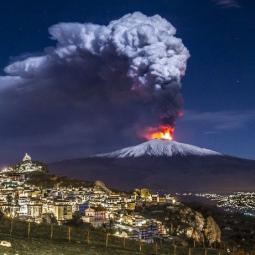
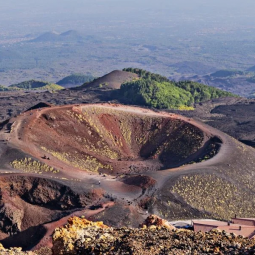
Etna Wine Region Guide
The Etna wine region is one of the most diverse and dynamic areas in Sicily. Its vineyards extend across volcanic slopes shaped by altitude, climate variation and mineral-rich soils. This guide explains districts, soils, native grapes, microclimates and practical information for planning vineyard visits. It helps visitors understand what influences the wines and what to expect across the region.

What You Will Learn in This Guide
-
🌋 Soil diversity: basalt, ash, pumice and mineral-driven flavours
-
🧭 District differences across north, east and south slopes
-
🍇 Native grapes: Nerello Mascalese, Nerello Cappuccio, Carricante
-
🌡️ Altitude effects on ripening, acidity and aromatic precision
-
🚗 Visiting tips: winery logistics, terrain and roads
-
📅 Best visiting months and harvest timing
-
🍷 Wine styles: Etna Rosso, Bianco and Rosato
1. Understanding the Etna Wine Districts
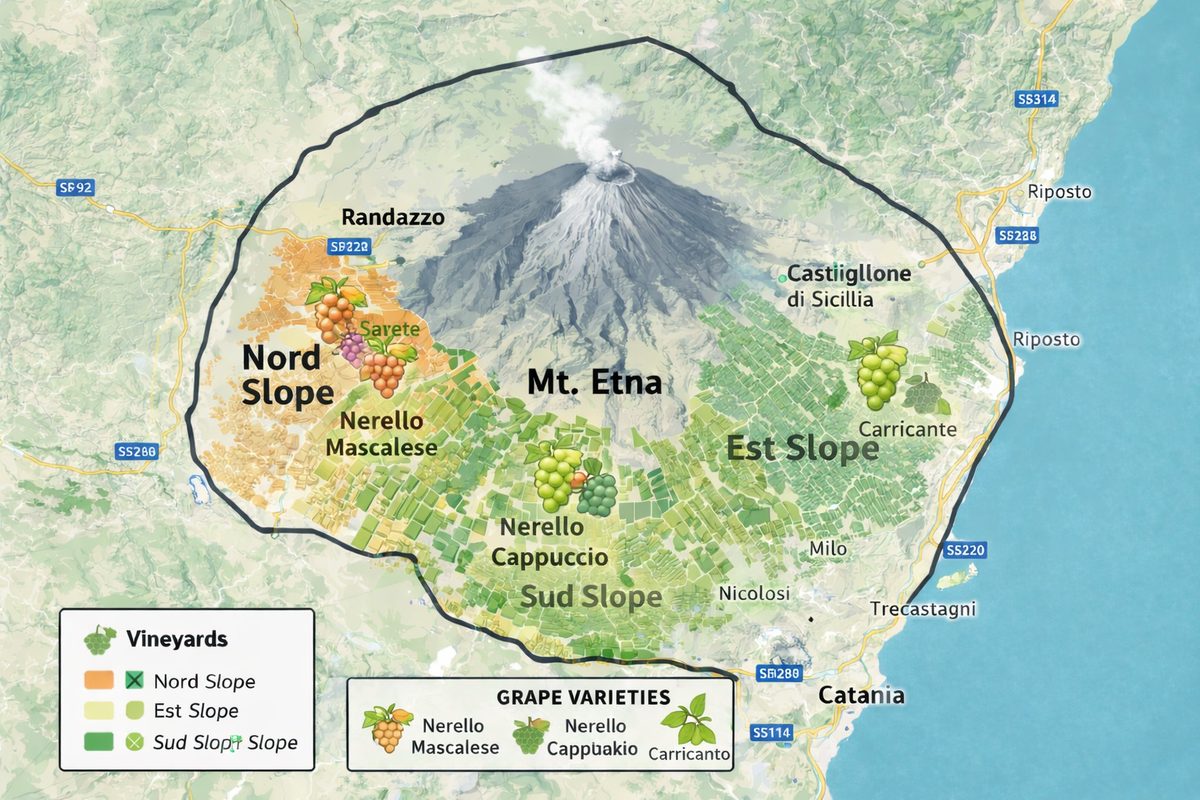
Etna’s vineyards wrap around the volcano, but each slope expresses different atmospheres, wine profiles and microclimates. Altitude, breezes, exposure and volcanic history shape both the taste of the wines and the landscapes visitors encounter.
What Makes Each Slope Distinct
-
🧭 North: coolest climate, slow ripening, structured reds
-
🌅 East: sea influence, bright whites, aromatic clarity
-
☀️ South: warm early season, fuller profiles, easier access
-
🌬️ Breezes: regulate humidity and reduce disease pressure
District Breakdown
-
🧭 Northern slopes — Ideal for Nerello Mascalese and structured wines
-
🌅 Eastern slopes — Fresh Carricante and panoramic coast views
-
☀️ Southern slopes — Warmer tones, approachable routes and earlier vintages
2. Volcanic Soils and Their Impact on Wine Style
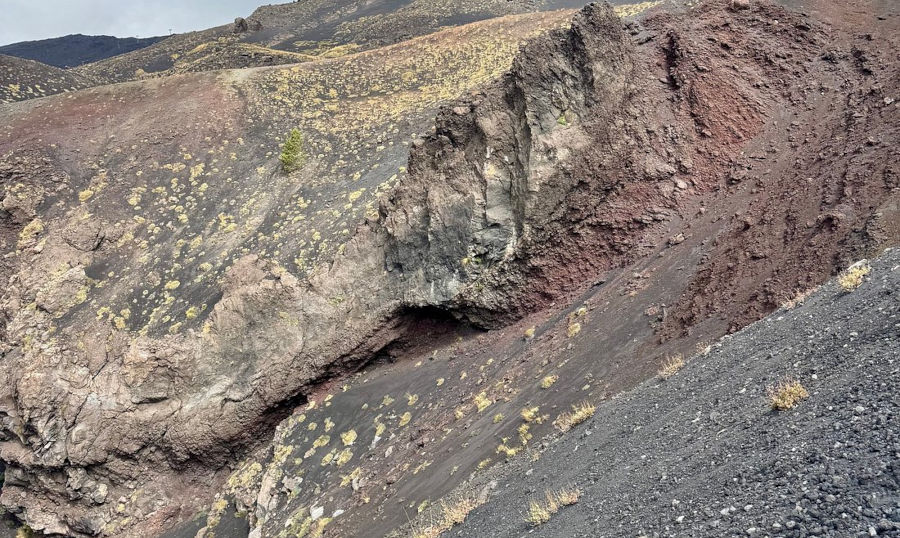
Etna is a mosaic of volcanic soils created by centuries of eruptions. Each eruption layered new materials, creating visible contrasts even within the same vineyard.
How Volcanic Soils Shape Wine
-
🪨 Basalt fragments → drainage + mineral tension
-
🌋 Ash deposits → moisture retention + higher acidity
-
🏜️ Volcanic sands → lighter aromatic wines
-
⚡ Mineral load → long, saline finishes typical of Etna DOC
Scientific Insight: Cause–Effect Relationships
-
⚗️ High potassium = sapidity and mineral persistence
-
🌡️ Black lava soils absorb heat = slow, even ripening
-
🔬 Microbial diversity differs by eruption layer = subtle aroma shifts
3. Native Grape Varieties
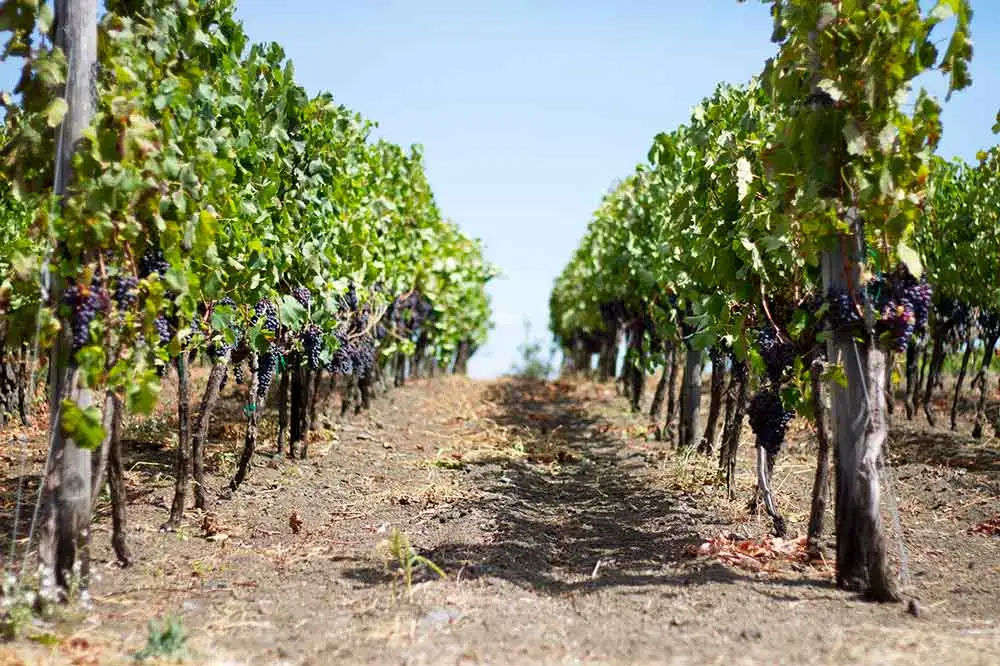
Etna’s autochthonous grapes have adapted for centuries to cold nights, steep terraces and volcanic soils. Their behaviour changes significantly with altitude and slope orientation.
Main Varieties
-
🍇 Nerello Mascalese — elegance, acidity, longevity
-
🌋 Nerello Cappuccio — colour, body and spice
-
🍏 Carricante — citrus, herbs and saline freshness
Why These Grapes Thrive Here
-
🌡️ Altitude preserves acidity
-
🌬️ Breezes reduce humidity
-
🪨 Mineral soils enhance structure and aromatic tension
4. Wine Styles Across the Volcano
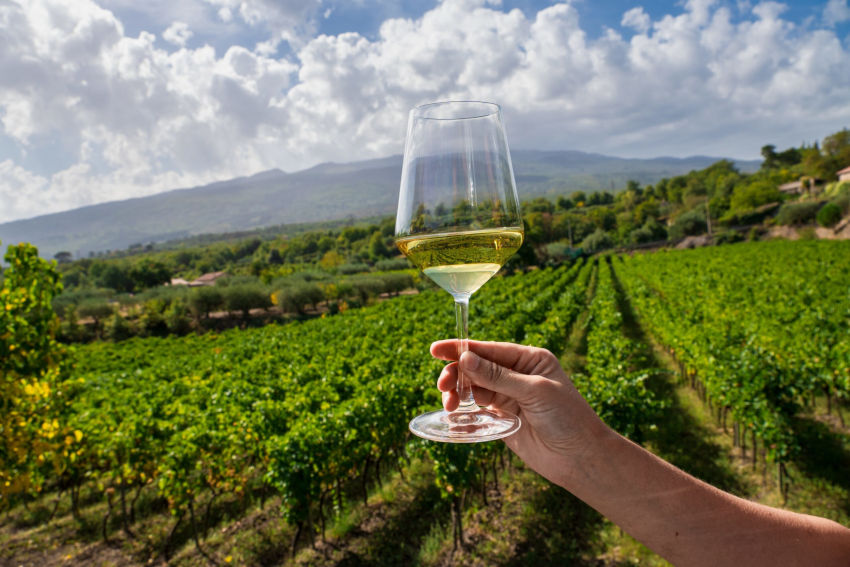
The combination of altitude, sun exposure and volcanic soils produces distinctive expressions of Etna DOC wines.
Primary Styles
-
🍷 Etna Rosso → red fruit, spices, tannic tension
-
🥂 Etna Bianco → citrus, herbs, high acidity
-
🌸 Etna Rosato → pale colour, delicate florals and freshness
Microclimatic Influence
-
🧭 North = structured Rosso
-
🌅 East = saline Bianco
-
☀️ South = fuller Rosato and expressive whites
5. Altitude and Microclimate
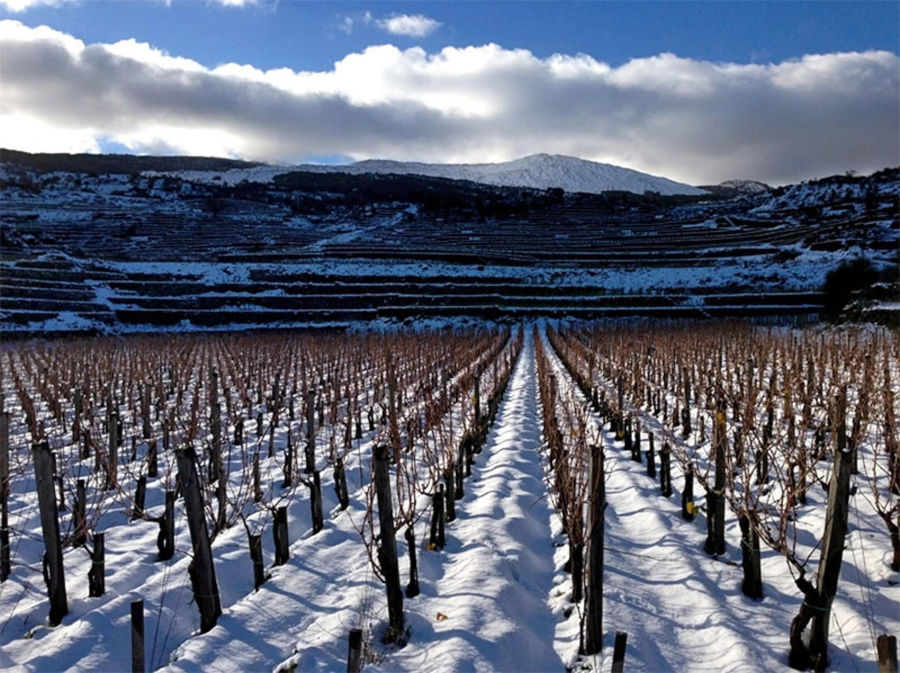
Etna’s vineyards span from 450 to over 1,000 meters — one of the widest altitude ranges in European viticulture. This creates sharp differences in temperature, sunlight and wind conditions.
Climate Highlights
-
🌡️ Large day–night shifts enhance acidity
-
🧭 Sun exposure varies dramatically by orientation
-
🌬️ Constant breezes stabilise humidity
-
❄️ Winter snow limits access at higher elevations
What This Means for Visitors
-
👀 Higher vineyards = best panoramic views
-
🚗 Narrow, winding roads at altitude
-
❄️ Some districts difficult to access in winter
6. How to Visit the Etna Wine Region
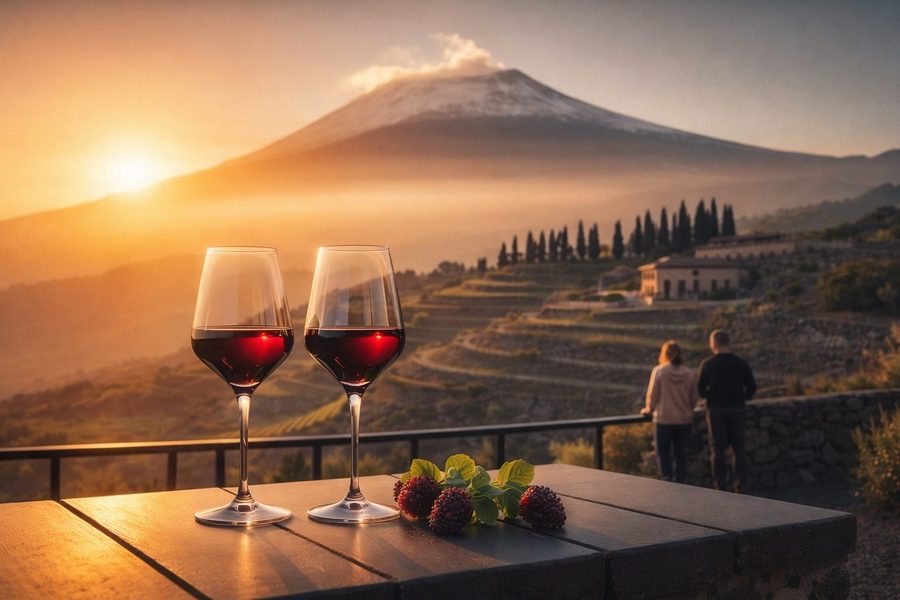
The terrain is diverse, with ancient stone terraces and roads crossing historic lava flows. Planning helps visitors understand distances and accessibility.
Visitor Tips
-
🥾 Wear stable footwear, terraces are uneven
-
🚗 Expect narrow roads in upper districts
-
🕒 Reserve tastings early in peak months
-
📍 Combine multiple slopes to compare styles
Practical Navigation Notes
-
⛰️ Some wineries sit on steep terraces
-
🗺️ GPS may be unreliable in rural areas
-
🚘 Recommended: small or mid-size cars
Explore Etna Wine Experiences A curated selection of routes and tasting activities across the volcano.
Final Recap: What Shapes Etna Wines
Etna’s identity emerges from volcanic soils, altitude, microclimates and native grape varieties. Visitors who understand these elements can better interpret tasting differences during cellar visits.
✔ Key Takeaways: Volcanic Terroir at a Glance
-
🌋 Volcanic soils create minerality and structure
-
🌡️ Altitude drives freshness and acidity
-
🍇 Native varieties define the region’s profile
-
🧭 Each slope offers different wine expressions
-
🚗 Planning helps navigate roads, slopes and winery access
❓ Etna Wine Region FAQs: Planning Your Visit and Wine Experience
What makes the etna wine region unique?
Altitude, volcanic soils and sharp temperature shifts combine to create wines with freshness, tension and mineral character uncommon in southern italy.
Which slope is best for wine tasting?
It depends on the wine profile you prefer:
- North → structured reds
- East → saline whites
- South → fuller wines and easier access
When is the best time to visit etna wineries?
April–june and september–october. Harvest (late september–mid october) may limit availability.
Do i need a car to explore the etna wine region?
Yes. Public transport does not reach most wineries, and slopes require flexible navigation.
Are wineries open year-round?
Many are, but high-altitude areas may be inaccessible in winter due to snow. Booking in advance is recommended.
Which wines should beginners try first?
- Etna rosso for structure and minerality
- Etna bianco for freshness and citrus
- Etna rosato for balance and approachability
Are guided tours recommended?
Yes. Terraced vineyards and geological contrasts are easier to understand with a local expert.
What should i wear?
Stable shoes and layers. Terraces are uneven and temperatures vary quickly with altitude.