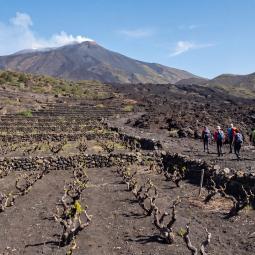
Mount Etna Weather: Spring vs Summer Conditions – What Changes in May and June
May and June are two very different months on Etna. Both are popular for tours. Both offer good conditions at mid-altitude. But the gap between them — in temperature, snow coverage, summit access, and what you can realistically expect on the day — is significant. Here is what actually changes and what it means for planning a visit.

In May, Mount Etna's north side at 1,800 metres averages 13°C with possible residual snow above 2,000 metres. In June, temperatures rise to 18°C at the same altitude and snow clears to the summit by mid-month. The summit crater area remains closed until mid-April and reopens progressively through spring. Half-day tours operate normally on both months with no itinerary changes.
🌡 May — Piano Provenzana (~1,800m): avg 13°C | Summit: avg 5°C
🌡 June — Piano Provenzana (~1,800m): avg 18°C | Summit: avg 10°C
❄️ Snow at 1,600–1,800m: cleared by end of March / mid-April
❄️ Snow at 2,000–2,500m: cleared by end of April / first week of May
❄️ Snow at summit: cleared by mid-June
🔒 Summit closed: mid-November → mid-April
📅 Half-day tours: available both months, no itinerary changes
Why May and June Feel Like Different Volcanoes
The coast in May is warm. Catania averages 20°C. Forty minutes up the road, Piano Provenzana sits at 13°C. An hour further, the upper slopes above 2,000 metres still carry snow from the winter season.
June closes that gap significantly. Piano Provenzana reaches 18°C. The summit — at over 3,300 metres — moves from 5°C to 10°C on average. The snow that covered the upper terrain through spring has cleared by mid-June on most years.
For visitors planning a tour, this difference is not just about temperature. It determines what terrain is accessible, what clothing is required, and what the landscape looks like on arrival.
Snow on Etna: When It Clears and What That Means at Each Altitude
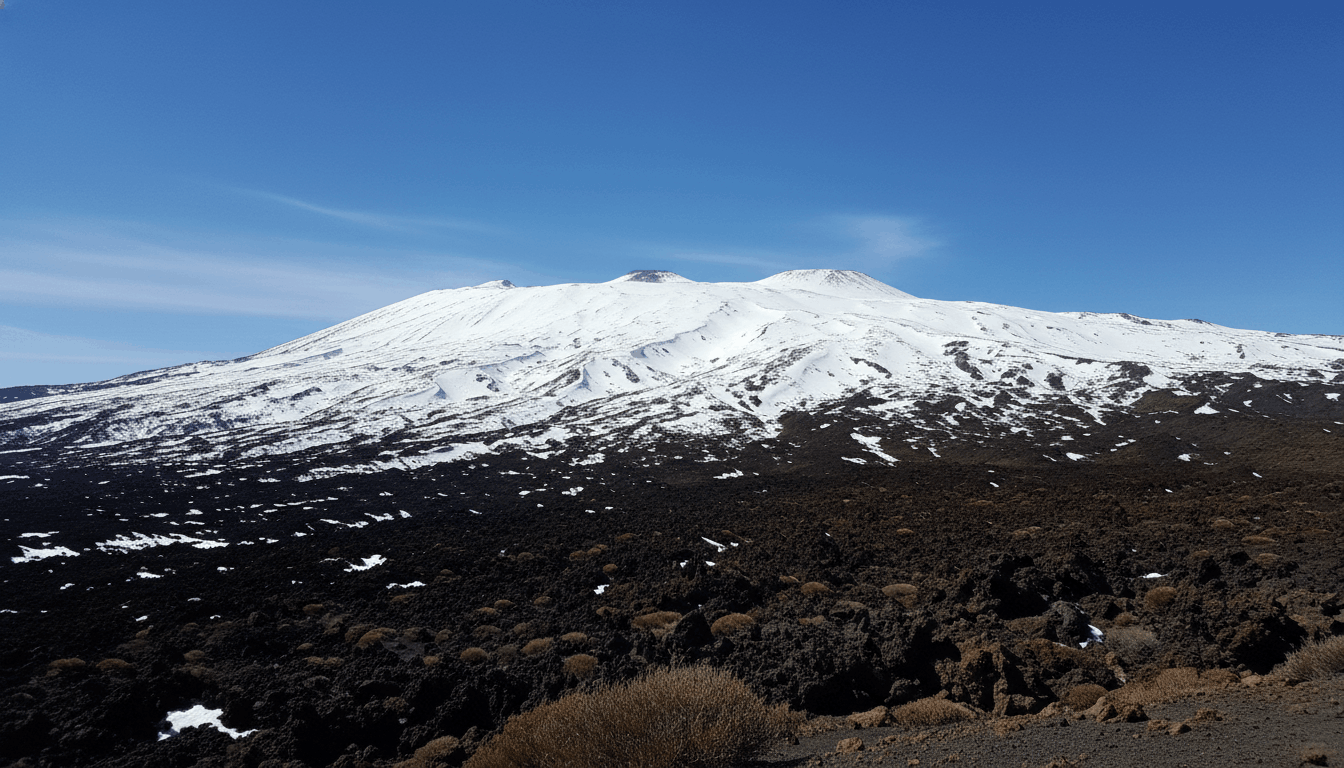
Snow on Etna does not disappear uniformly. It clears from the bottom up, at a pace determined by altitude.
At 1,600–1,800 metres — the Piano Provenzana area on the north side — snow is typically gone by the end of March or mid-April. This is the zone where most half-day tours operate. By May, this terrain is fully accessible and dry.
Between 2,000 and 2,500 metres, snow clears by the end of April or the first week of May. Visitors arriving in early May may still find traces at this altitude, particularly on north-facing slopes and in shaded gullies.
At the summit — above 3,000 metres — snow typically clears by mid-June. During May and early June, the summit area carries significant snow coverage. This is a visual feature of the landscape at this time of year, not an obstacle for standard half-day tours which operate at lower altitudes.
Summit Access in Spring: What Opens and When
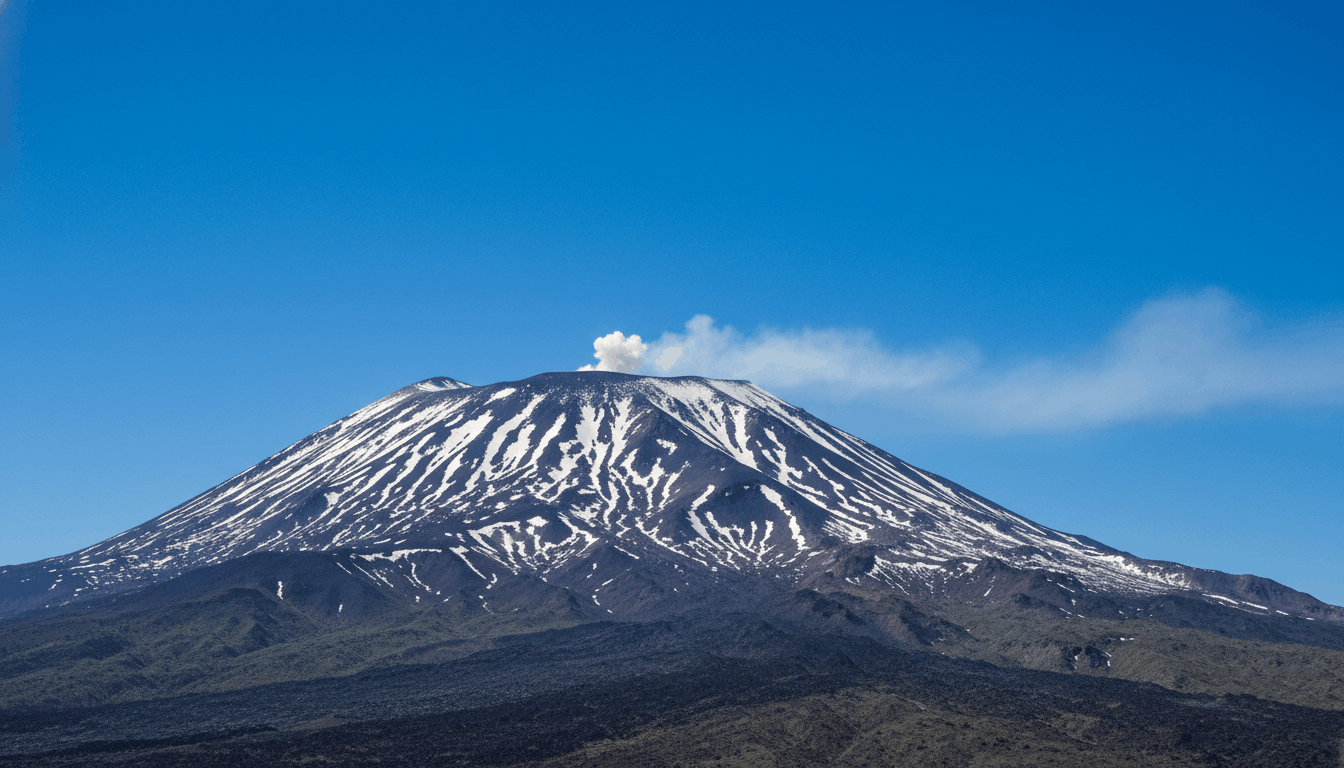
The summit crater area is closed to visitors from mid-November to mid-April. This closure is operational — it reflects both snow conditions and volcanic safety protocols at high altitude.
From mid-April, access progressively reopens. By May, the north side routes at standard half-day altitudes (up to approximately 1,900 metres) are fully operational. Summit excursions — which reach 2,900–3,300 metres — reopen on a conditions-dependent basis through spring.
For visitors planning a half-day tour in May or June, the summit closure does not affect the itinerary. Half-day tours operate on the north side at mid-altitude and are not impacted by upper-summit access conditions.
Temperature at Tour Altitude: What to Wear in May vs June
The altitude of a standard half-day Etna tour — approximately 1,900 metres on the north side — sits between the coast and the summit in terms of temperature. The gap between what you feel at sea level and what you encounter on the mountain is consistent and predictable.
In May:
- Catania coast: ~20°C
- Piano Provenzana (~1,800m): ~13°C
- Difference: approximately 7°C lower than the coast
- Wind is variable — layers are essential
In June:
- Catania coast: ~25°C
- Piano Provenzana (~1,800m): ~18°C
- Difference: approximately 7°C lower than the coast
- Conditions are more stable, wind typically lighter
In both months, the rule is the same: the coast temperature is not a reliable guide for what to wear on the mountain. A light jacket, closed footwear, and sun protection are standard requirements regardless of the forecast at sea level.
For a complete breakdown of what to pack, see our guide on what to wear on Mount Etna.
Half-Day · North Side · Small Group · From Taormina
Mount Etna Half-Day Tour from Taormin
North side of Etna up to 1,900 metres. Professional local guide. Available May through November. No summit access required — full itinerary runs at mid-altitude.
May vs June: Which Month Is Better for an Etna Tour?
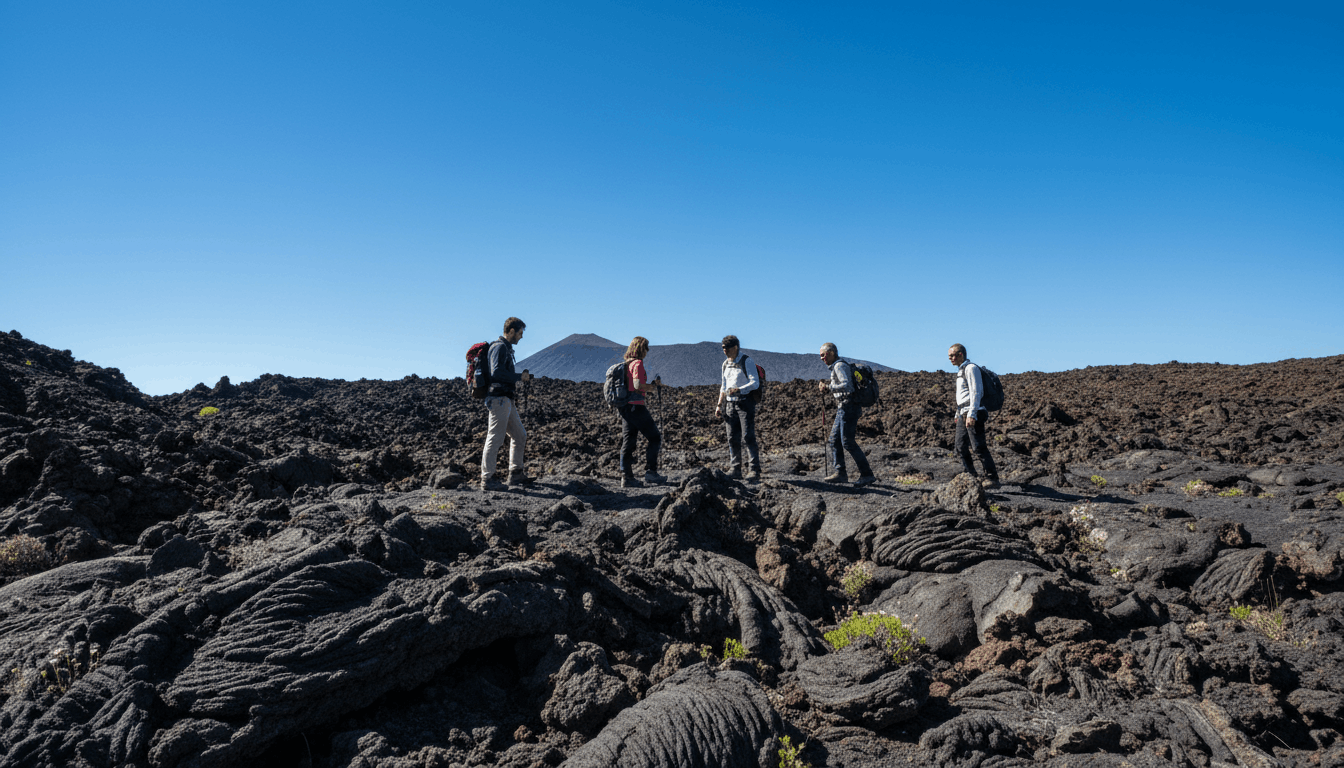
There is no objectively better month. The choice depends on what the visitor is looking for.
May works well if:
- You want the volcano with snow still visible on the upper slopes
- Cooler temperatures at altitude are preferable
- Crowds are a concern — May is significantly quieter than June
- The landscape contrast between black lava and white snow is a priority
June works well if:
- Warmer conditions at altitude are preferred
- Clearer access to upper terrain matters
- The visit coincides with an existing travel itinerary in June
Both months offer stable conditions for half-day tours on the north side. Neither requires special equipment beyond standard closed footwear and layered clothing. The itinerary does not change between the two months.
One practical note: May offers more availability across departure dates. June marks the start of the high season in eastern Sicily, and small-group tours fill earlier. Booking in advance is recommended from June onwards.
SAFETY MODULE
Mount Etna is an active volcano. Weather conditions at altitude can change rapidly regardless of the forecast at sea level. Temperature at 1,900 metres is typically 7–8°C lower than at the coast in both May and June. Closed footwear and a light wind layer are required on all tours. Tour availability is confirmed on the day based on volcanic and weather conditions. In the event of adverse conditions, the guide determines the accessible route on the day of the tour.
FAQ
Q: Is snow a problem for Etna tours in May? No. Half-day tours on the north side operate at approximately 1,900 metres. At this altitude, snow has cleared by the time May begins. Snow above 2,000 metres may still be visible in early May but does not affect the standard tour itinerary.
Q: Is the summit accessible in May? The summit crater area is closed until mid-April. From mid-May, upper altitude routes begin to reopen on a conditions-dependent basis. Standard half-day tours do not reach the summit and are not affected by upper-summit access conditions.
Q: How cold is it on Etna in May and June? At Piano Provenzana (~1,800 metres), average temperatures are 13°C in May and 18°C in June. At the summit (3,300 metres), averages are 5°C in May and 10°C in June. Coastal temperatures in Catania are approximately 7–8°C higher than at tour altitude in both months.
Q: Do I need special equipment for a May or June tour? No special equipment is required. Closed footwear, a light jacket, and sun protection are sufficient for both months. The tour guide provides any additional equipment required for the itinerary.
Q: Are tours available in both May and June? Yes. Half-day tours on the north side run from April through November. No itinerary changes apply between May and June. Availability is higher in May — June marks the start of the high season and groups fill earlier.
Q: Which month is less crowded? May is significantly less crowded than June. The high season in eastern Sicily begins in June and runs through August. Visitors prioritising smaller groups and more available dates should consider May.
May and June both offer reliable conditions for an Etna half-day tour. The practical differences — temperature, snow coverage, summit access, and crowd levels — are real and worth knowing before booking. May gives you a quieter mountain with the visual contrast of snow on the upper slopes. June gives you warmer conditions and a fully snow-free landscape from mid-month. The tour itinerary runs identically in both months.