What Is the Best Time of Day to Visit Mount Etna? Honest Advice from a Local Guide
Understanding the best time of day to visit Mount Etna is essential for clear views and a safe, rewarding experience. In this guide, a local expert explains how visibility, weather conditions and cloud formation change hour by hour, and why mornings usually offer the most stable climate on the volcano. Learn the ideal visiting window for hiking, photography and sightseeing so you can plan your Etna trip at the perfect moment.

What Is the Best Time of Day to Visit Mount Etna?
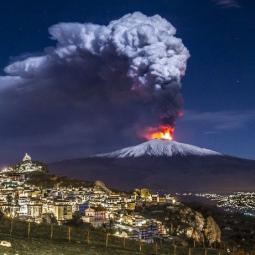
Visiting Mount Etna is one of the most memorable experiences you can have in Sicily, but few travelers realize just how much the time of day influences visibility, comfort, and the overall quality of the visit. A clear morning can reveal breathtaking views stretching as far as Calabria, while a cloudy early afternoon can completely hide the summit behind a thick white curtain.
As a local Etna guide who has accompanied thousands of travelers, I’ve seen one pattern repeat itself every season: timing is everything. The best experiences on the volcano—whether you hike, join a jeep tour, or simply explore the viewpoints—almost always happen in the morning.
This in-depth guide explains why mornings offer better conditions, how the microclimate evolves hour by hour, and how timing affects photography, hiking, and safety.
Why the Time of Day Matters on Mount Etna
Etna’s Microclimate: A Volcano with Its Own Weather
Mount Etna rises from sea level to more than 3,300 meters, creating one of the sharpest altitude gradients in Southern Europe. It’s common to leave the coastline at 28 °C and arrive one hour later on the volcano at 10 °C with strong wind.
This steep vertical difference generates rapid weather changes, especially as the day warms up.
Visibility: The Morning Window
All local guides know that visibility is best between 08:00 and 10:30.
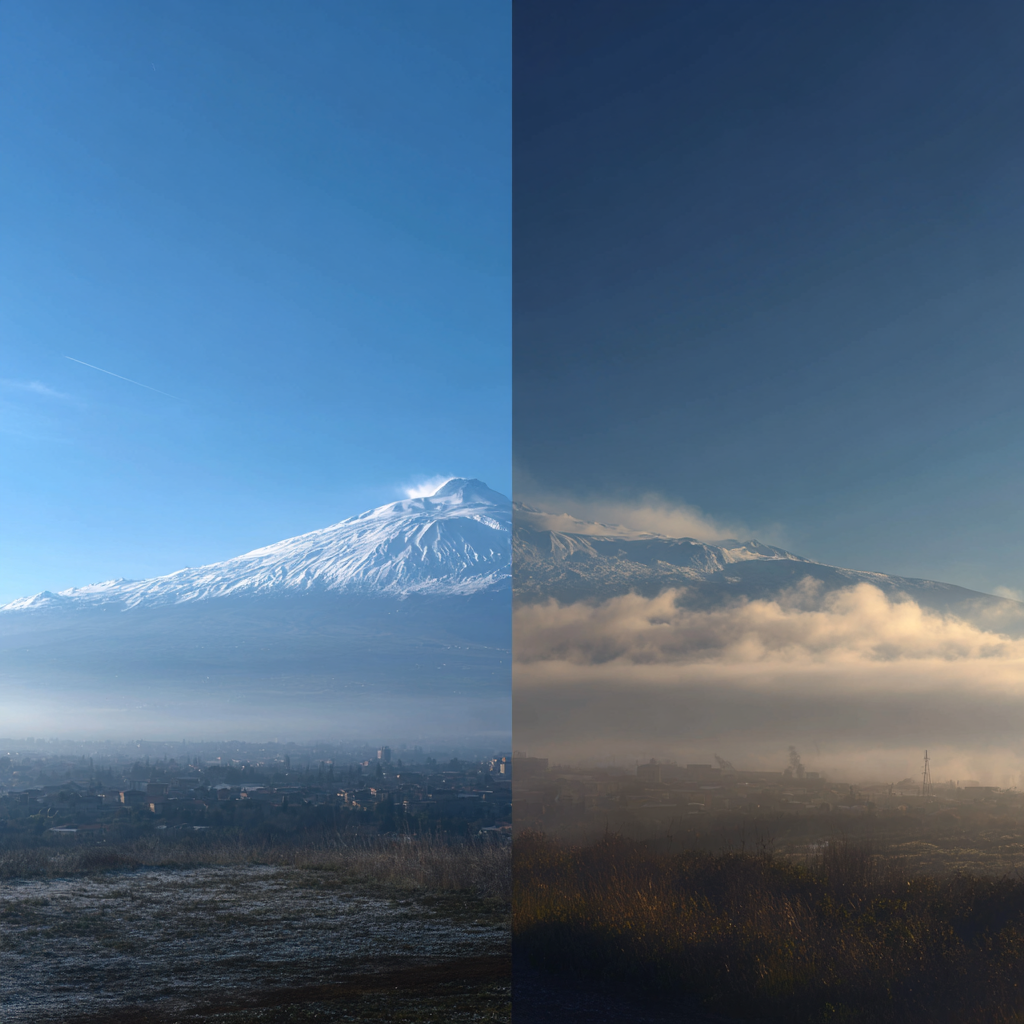
As the sun heats the lower slopes, warm humid air begins to rise. When it reaches colder layers at higher altitude, it condenses. The result is a fast-forming ring of clouds around the summit, typically between 11:30 and 14:00.
If you want additional practical advice for planning your visit—including clothing, safety and logistics—you may find our guide 10 Tips When Visiting Mount Etna (azzurro) helpful.
Temperature: Mild in the Morning, Unstable Later
Even in July and August, mornings on Etna are fresh and comfortable. By early afternoon, temperatures rise sharply at lower altitudes while the summit area can become windy, cold and suddenly clouded.
The Short Answer: The Best Time to Visit Mount Etna
If you want clear views, stable temperatures and the safest, most enjoyable conditions, the ideal time to visit is:
Between 08:00 and 10:00.
During these hours, Etna is typically clear, winds are lighter, trails are quieter, and photography conditions are at their best.
And What About the Afternoon?
After 11:30, visibility often drops as clouds form. Wind increases, dust rises on unpaved tracks, and viewpoints become busier.
An afternoon visit is still pleasant, but far less predictable.
Sunset: Beautiful but Not Guaranteed
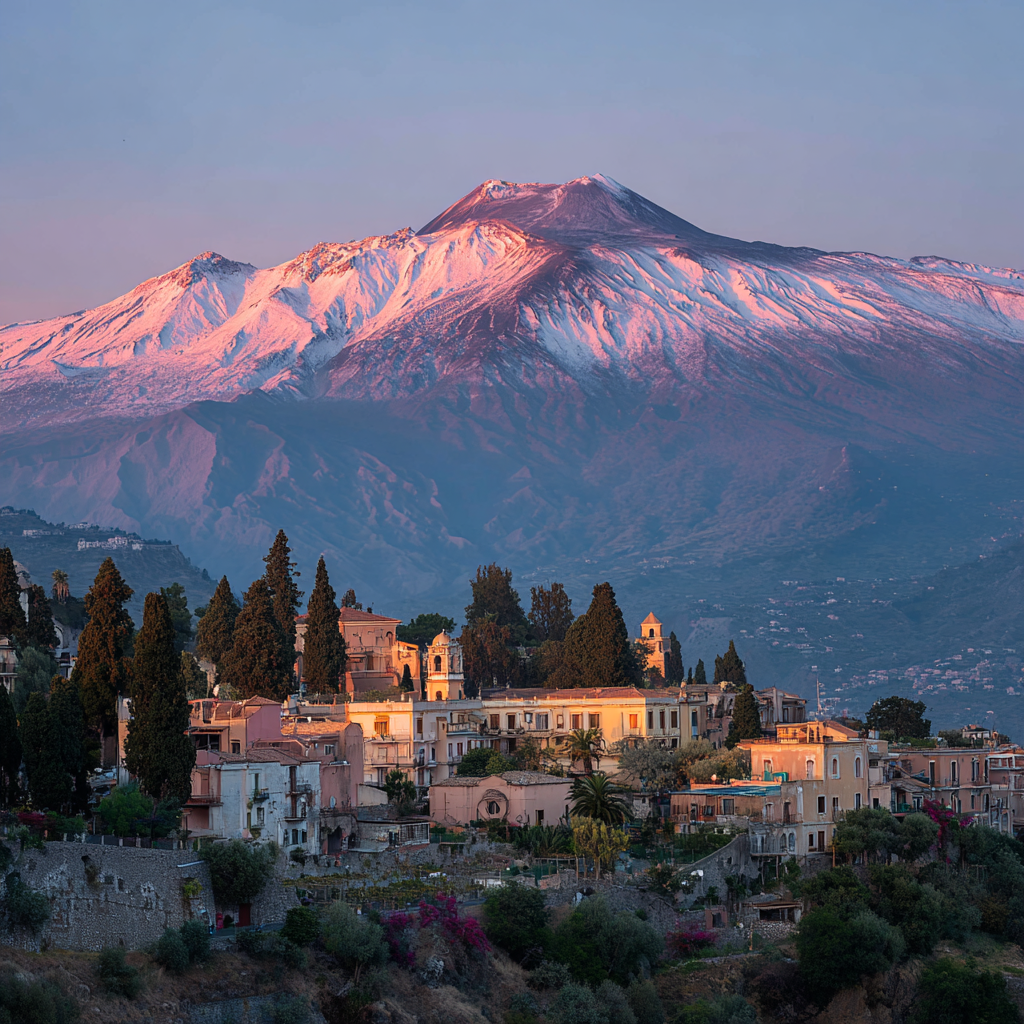
Sunset on Etna—especially on the north side—can be magical, but it’s among the most unpredictable times in terms of visibility.
Visitors interested in a quieter side of Etna, especially on the north side of the volcano, will find that conditions, light and crowd levels can differ significantly compared to the south.
Morning vs Afternoon: What Really Changes?
Temperature by Altitude
Altitude 08:00 14:00
1,800 m 12–14 °C 20–22 °C
2,500 m 6–8 °C 14–16 °C
2,900 m 2–4 °C 10–12 °C
Short sleeves at 1,800 meters quickly become uncomfortable above 2,500 meters if wind or fog develops.
Fog Formation
Warm, humid coastal air rises and cools rapidly on Etna’s steep slopes. Because the volcano is tall and isolated, condensation happens extremely fast. Fog banks can appear in minutes, reducing visibility to just a few meters.
Wind
Wind typically intensifies by 20–40% in the afternoon, especially above 2,000 meters.
Best Time of Day for Each Activity
Hiking & Trekking
All hikes—from easy loops to more demanding routes—are at their best early in the day.
Light is softer, visibility clearer, and trails far quieter.
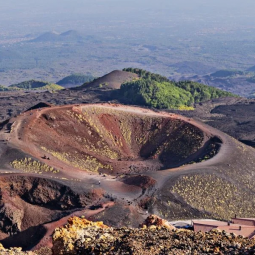
One of the most fascinating and accessible morning hikes is the route towards the Sartorius Craters, an area shaped by the 1865 eruption and known for its unique “button-shaped” cones.
Jeep / 4x4 Tours
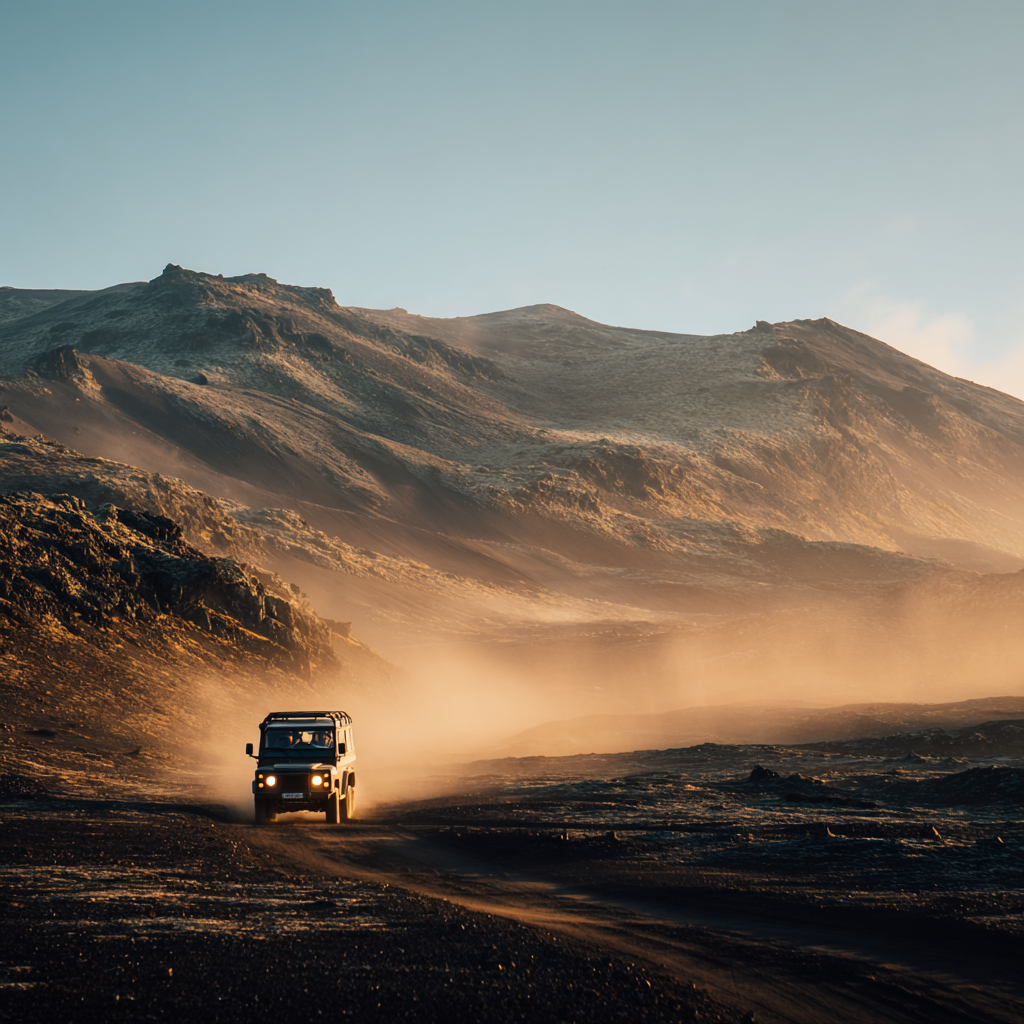
Jeep tours operate all day, but mornings offer clearer air, better photography and more pleasant temperatures.
Full-Day Itineraries
A full-day visit benefits greatly from a morning start, placing the scenic parts of the itinerary before cloud formation.
Lava Tubes
Lava tubes can be visited at any time, but walking on dark lava under the midday sun can be hot. Morning is simply more comfortable.
Photography
Morning light on Etna is extraordinary, with long shadows, soft color gradients, and clear skies.
Planning your visit, practical advice, visiting Mount Etna

Best Departure Times by Starting Point
From Taormina
Drive: approx. 1 hour
Best departure: 07:00–07:30
From Catania
Drive: approx. 45 minutes
Best departure: 08:00
From Messina / Cruise Passengers
Drive: approx. 1h30
Depart early—visibility often changes before midday.
Common Mistakes to Avoid
- Starting hikes after 12:00
- Checking only coastal weather (Etna has its own climate)
- Wearing summer clothes above 2,000 meters
- Assuming afternoon conditions match morning ones
- Advice from a Local Guide
A balanced morning itinerary might include:
- Arrival around 08:30
- Walk on old craters and lava fields
- Visit to a lava tube
- A couple of scenic viewpoints
- Optional lunch in a mountain hut or countryside winery
- These timings naturally follow the rhythm of the volcano and guarantee the best experience.
FAQ
Is sunrise worth it?
but it’s cold—dress accordingly. On the north side you will not be able to see the sun, but rather enjoy the soft, indirect glow that lights up the lava fields and the forested slopes, creating a quiet, atmospheric sunset that feels completely different from the brighter colors of the south side
When do clouds form?
Between 14:00 and 18:00 depending on the season.
Is the afternoon dangerous?
Not dangerous, just less scenic and less predictable.
Best time for families with kids?
Morning, when temperatures are mild and trails are quieter.

Final Advice from a Local Guide
Mount Etna rewards early risers.
If you want clear skies, balanced temperatures and the most beautiful light, the best time to visit is always between 08:00 and 10:00.
Thousands of travelers have asked me the same question over the years, and my answer has never changed:
The morning is always the best moment to experience Mount Etna.
If you're planning your visit and want inspiration for routes, viewpoints or logistics, you can explore the tours and itineraries available on our website. They follow the natural rhythm of the volcano and help you make the most of the morning clarity.
Ready to Experience Etna at Its Best?
Explore Mount Etna in the Ideal Morning Light
If you want to enjoy clear views, mild temperatures and the most beautiful landscapes, choose a morning experience on Mount Etna. Our guided itineraries follow the natural rhythm of the volcano and are designed to help you make the most of your visit.