Etna Wine vs Mainland Italy Wines: Why Volcanic Terroir Creates Different Flavors
You have tasted Pinot Noir from Burgundy or Piedmont. You have tasted Chardonnay from Alto Adige. On Mount Etna, the same grapes grow in volcanic basalt soil at 600 to 1,000 metres altitude — and they taste different. Not slightly different. Structurally different. This is what volcanic terroir does, and it is why Etna has become one of the most discussed wine regions in Europe over the past two decades.

Mount Etna produces both indigenous Sicilian varieties — Nerello Mascalese, Nerello Cappuccio, Carricante, and Catarratto — and continental varieties including Chardonnay and Pinot Noir. Grown in volcanic basalt soil at 600–1,000 metres altitude, these grapes develop higher acidity, lower alcohol, and distinct mineral characteristics compared to the same varieties produced in northern Italy. Etna DOC is the official designation covering wines from the volcano's slopes.
RECAP
🍷 Indigenous varieties: Nerello Mascalese, Nerello Cappuccio (red) | Carricante, Catarratto (white)
🍾 Continental varieties on Etna: Chardonnay, Pinot Noir
📍 Altitude: 600–1,000 metres above sea level
🌋 Soil: volcanic basalt — mineral-rich, well-drained 🏷 Designation: Etna DOC
❄️ Climate: significant day-night temperature variation
Same Grape. Different Volcano. Why Location Changes Everything
Most wine drinkers know that the same grape can taste different depending on where it grows. A Pinot Noir from Burgundy tastes different from one produced in California. The difference is terroir — the combination of soil, climate, altitude, and exposure that shapes the grape before it reaches the winery.
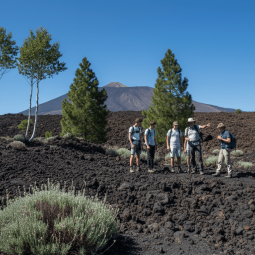
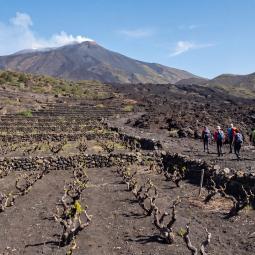
Etna is an extreme terroir. The soil is volcanic basalt — porous, mineral-rich, and structurally unlike any agricultural land in northern Italy. The altitude sits between 600 and 1,000 metres. The temperature drops significantly at night even in summer. Rainfall is higher on the northern slopes than on the coast below.
Put a Pinot Noir vine in that environment and it produces something the winemaker in Piedmont cannot replicate. Not better or worse — different in a way that is measurable in the glass.
The Indigenous Varieties: What Only Etna Produces
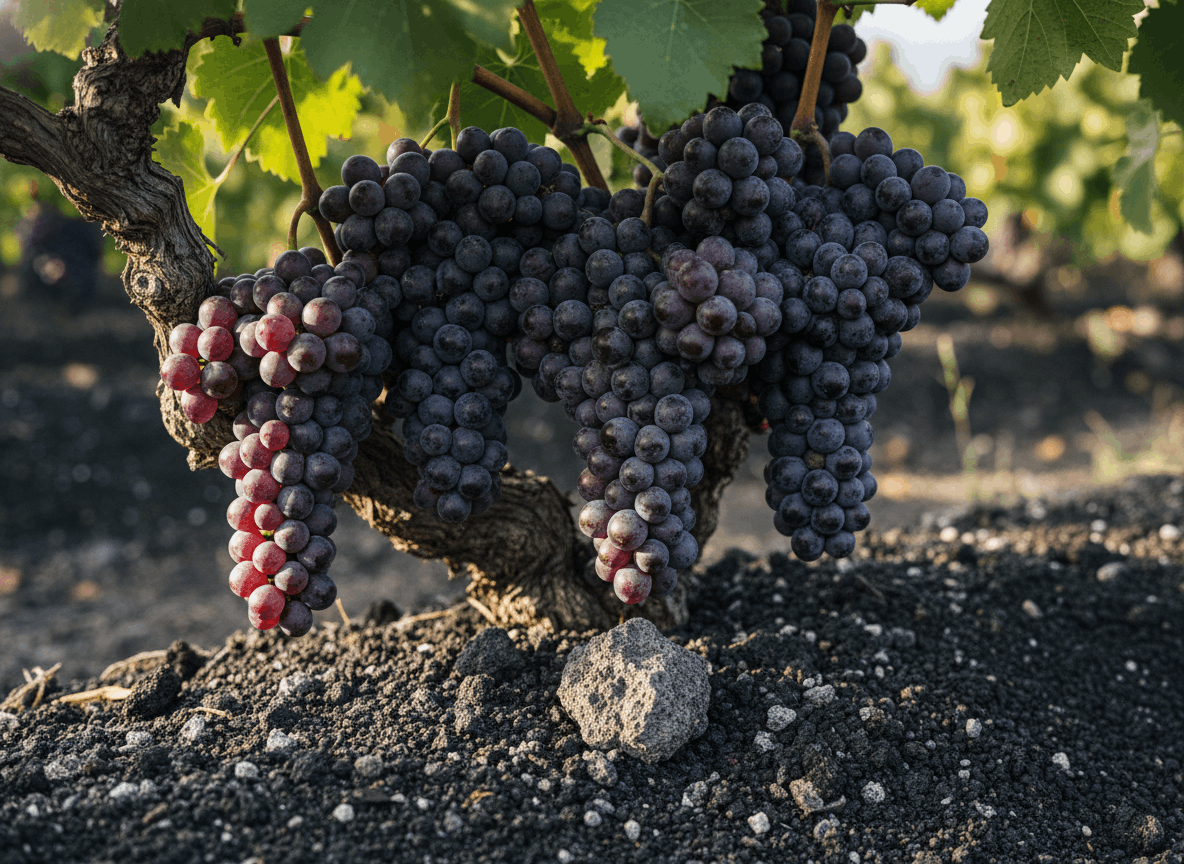
Before the continental varieties arrived on the volcano's slopes, Etna had its own grapes. Two of them are found almost nowhere else in the world at commercial scale.
Nerello Mascalese is the dominant red variety on Etna. It produces wines with high acidity, fine tannins, and an earthy, mineral quality that is frequently compared to Pinot Noir — despite being a completely different grape. It is thin-skinned, sensitive to altitude and exposure, and produces wines that reflect the specific contrada, or zone, where the vines grow.
Nerello Cappuccio is typically blended with Nerello Mascalese. It adds colour and body to what the Mascalese leaves lean.
On the white side, Carricante is the indigenous variety that defines Etna Bianco DOC. It produces wines with high natural acidity and a saline, citrus-driven profile that reflects the mineral soil directly. Catarratto is a broader Sicilian variety that on Etna takes on a freshness and structure it does not show at lower altitudes on the island.
None of these varieties grow in northern Italy. They are specific to this volcano and its surrounding territory.
Chardonnay and Pinot Noir on a Volcano: What Changes at 800 Metres
This is where Etna becomes genuinely unusual in the Italian wine landscape.
Chardonnay and Pinot Noir are northern Italian varieties. They are associated with cooler climates, clay or limestone soils, and relatively flat or gently sloped terrain. Producing them in Sicily seems counterintuitive — the island is associated with heat, low altitude, and full-bodied reds.
Etna changes that logic entirely.
At 800 metres on the north slope of the volcano, the temperature profile is closer to Alto Adige than to Palermo. The nights are cold. The growing season is long. The volcanic soil drains rapidly and does not retain heat the way clay does. The result is a Chardonnay with higher acidity and lower alcohol than its northern counterpart — more structured, less fruit-forward, with a mineral finish that comes directly from the basalt.
The same applies to Pinot Noir on Etna. The tannins are finer. The colour is lighter. The profile is more restrained. Winemakers working with these varieties on Etna are not trying to replicate Burgundy or Barolo. They are working with what the volcano gives them — and what it gives them is structurally different from anything produced at sea level.
Why Etna Became a Reference Point in European Wine
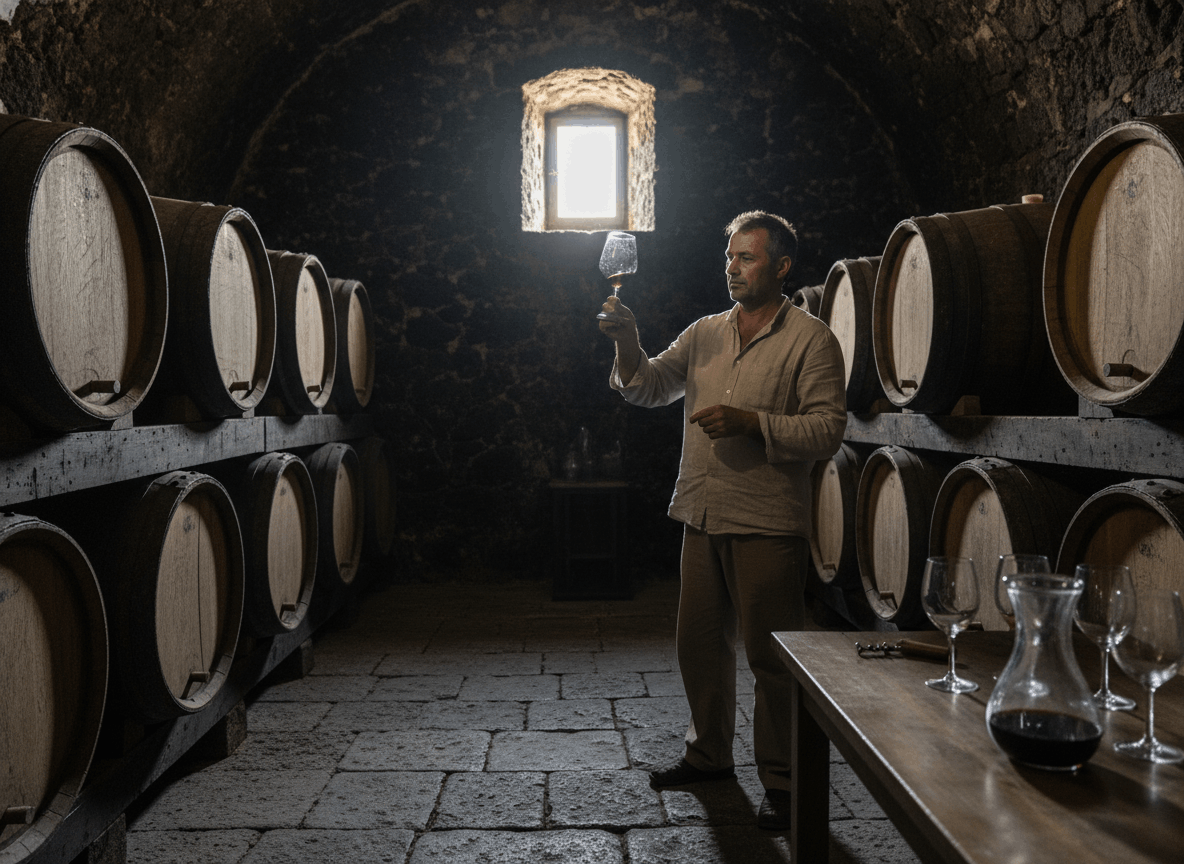
Twenty years ago, Etna wine was a local product with limited distribution. Today, boutique producers on the volcano's slopes are listed in restaurants across Europe and exported to markets that would not have considered Sicilian wine a serious category a generation ago.
The shift happened for a specific reason: Etna offers something that most established wine regions cannot — extreme terroir combined with very old vines. Some Nerello Mascalese vines on the north slope are over 100 years old. Pre-phylloxera vines still producing fruit. This is rare in Europe and it produces wines with a complexity that younger plantings cannot replicate.
The Etna DOC designation covers the wines produced on the volcano's slopes and regulates production. Within that designation, individual contrade — named zones on the volcano — are increasingly used to indicate where specific wines originate, in a system that parallels the cru system of Burgundy.
For a traveler arriving in eastern Sicily, this context matters. Tasting a Nerello Mascalese from a specific north-slope contrada is not the same as tasting a generic Sicilian red. It is tasting a place — a specific piece of volcanic terrain that exists nowhere else.
Boutique Winery · Etna DOC Tasting
Etna Wine Tour from Taormina Small Group ·
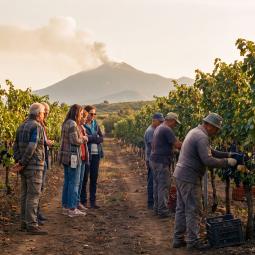
Visit a boutique winery on Etna's slopes and taste Etna DOC wines — including indigenous varieties and continental grapes grown on volcanic soil. Lunch included.
Etna Wine vs Northern Italy: The Practical Difference in the Glass
This is not an abstract distinction. It is something you notice when tasting.
A Chardonnay from Alto Adige is typically fuller, rounder, and more fruit-driven. The same grape on Etna produces a wine that is leaner, more acidic, and finishes with a mineral quality that is difficult to describe without reference to the soil it came from.
A Pinot Noir from Piedmont has structure and tannin. An Etna Pinot Noir is lighter in colour, lower in alcohol, and has a delicacy that surprises most tasters who associate Sicily with warm, heavy reds.
The indigenous varieties offer no direct comparison because there is nothing equivalent in northern Italy. Nerello Mascalese at 900 metres on the north slope of an active volcano is a product of conditions that do not exist in Barolo or Valpolicella. The acidity, the mineral edge, the earthy quality — these come from the basalt, the altitude, and the temperature variation that the volcano creates.
For anyone who has tasted Italian wine before, Etna is a useful recalibration. The island produces something the mainland cannot.
For more on the Etna wine region and its DOC structure, see our Etna Wine Region Guide and Etna Wines Sicily.
FAQ
Q: What is the difference between Nerello Mascalese and Pinot Noir? They are different grapes entirely. Nerello Mascalese is indigenous to Etna and produces wines with high acidity, fine tannins, and an earthy mineral profile. The comparison to Pinot Noir comes from the structural similarities — both are thin-skinned, altitude-sensitive varieties that produce lighter-coloured reds. The flavour profiles are distinct.
Q: Does Etna actually produce Chardonnay and Pinot Noir? Yes. Boutique producers on Etna's north slope cultivate both varieties. At 600–1,000 metres altitude in volcanic basalt soil, these grapes develop characteristics — higher acidity, lower alcohol, mineral finish — that differ significantly from the same varieties produced in northern Italy.
Q: What is Etna DOC? Etna DOC is the official Italian designation for wines produced on Mount Etna's slopes. It covers reds (primarily Nerello Mascalese), whites (primarily Carricante), and rosé wines. The designation regulates production zones, grape varieties, and minimum ageing requirements.
Q: Can I taste Etna wines during a tour? Yes. Sicily Active offers a wine tour that includes a visit to a boutique winery on Etna's slopes, with a guided tasting of Etna DOC wines paired with local products. See the tour details above.
Q: Are Etna wines expensive? Boutique Etna wines — particularly single-contrada Nerello Mascalese — have increased significantly in price over the past decade as international demand has grown. Entry-level Etna DOC wines remain accessible. The price range is wide and reflects the producer, the vintage, and the specific zone of production.
CONCLUSION
Etna is not a warm-climate wine region that happens to produce recognisable varieties. It is a high-altitude volcanic environment that transforms every grape it grows — indigenous or continental — into something with a specific mineral identity. The comparison with northern Italy is useful not because Etna is trying to compete with Barolo or Burgundy, but because it shows what extreme terroir does to familiar varieties. For anyone tasting wine in eastern Sicily, that difference is worth understanding before the first glass.