Taormina Travel Guide: What to See, Where to Go, and Best Experiences
Taormina remains one of the most celebrated destinations in southern Italy, known for its unique position between the Ionian Sea and Mount Etna. With a compact historic center, dramatic landscapes, and a rich cultural heritage, Taormina offers an experience that blends archaeology, nature, gastronomy, and scenic views. This guide provides an updated and authoritative overview for 2026 visitors, focusing on how to explore the town efficiently while understanding its geography, attractions, beaches, transport systems, and nearby natural areas.

-
🏛 Historic charm: Greek–Roman origins, medieval lanes, iconic piazzas and panoramic terraces
-
🌅 Best viewpoints: Greek Theatre, Piazza IX Aprile, Madonna della Rocca, Castelmola
-
🏖 Beaches: Isola Bella, Mazzarò, Spisone, Mazzeo and sandy Giardini Naxos
-
🚡 How to move around: cable car, buses, walking routes, ZTL rules and main parking areas
-
✈️ How to get there: trains, shuttles, A18 motorway, airport transfers
-
🍽 Food highlights: Sicilian classics, seafood, volcanic wines and Etna-sourced ingredients
-
🌋 Top day trips: Mount Etna, Alcantara Gorges, Castelmola, Savoca, Catania, Messina
-
📅 Best time to visit: spring and autumn for balanced weather and fewer crowds
Understanding Taormina: History, Setting and Why It Matters in 2026
Taormina’s appeal lies in its strategic location and long cultural evolution. Founded in the 4th century BC, the town has absorbed Greek, Roman, Arabic, Norman, and Spanish influences. Its architecture reflects centuries of transitions, from ancient theatres to medieval squares and Baroque façades.
 The Strategic Position Between Etna and the Ionian Sea

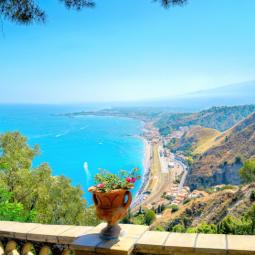
Taormina sits on a natural terrace known as Monte Tauro. This elevated position offers panoramic views of the coastline, along with clear vistas of Mount Etna. The landscape includes steep cliffs, narrow roads, and terraces overlooking the sea. The combination of maritime and volcanic influences shapes local weather and natural environments.
Historical Overview: Greeks, Romans, Arabs, Normans
Greek settlers founded Tauromenion in the 4th century BC. The Romans later expanded the theatre and road networks. Arab rule introduced agricultural innovations and terrace systems. The Normans strengthened fortifications and promoted trade. Baroque and Spanish influences shaped local churches and palaces. This layered past emerges throughout the historic center.
Why Taormina Remains One of Italy’s Most Visited Destinations
Taormina offers a blend of culture, scenery, and accessibility. The Greek Theatre remains a major attraction, while the historic center provides pedestrian streets, cafés, and architectural variety. Beaches, gardens, and panoramic views complete the experience. Its proximity to Etna and the Alcantara Canyon adds natural appeal.
Taormina Essentials 2026
📍 Location: Eastern Sicily, above the Ionian Sea
🏛 Founded: 4th century BC
⛰ Elevation: 200 meters above sea level
🌊 Coastline: Rocky coves and marine reserve
🎭 Heritage: Greek, Roman, medieval, Baroque
👥 Peak Tourism: June–September
🚶 Town Style: Pedestrian-friendly historic core
The Different Areas of Taormina: A Complete Geographic Breakdown
Understanding Taormina’s layout helps visitors plan movement between beaches, historic sites, and panoramic points. The town consists of the hilltop center and the seaside district below.
Taormina Centro Storico (Corso Umberto and surroundings)
The historic center stretches between Porta Messina and Porta Catania. Corso Umberto acts as the main pedestrian axis, offering cafés, boutiques, and churches. Side streets lead to lookout terraces and gardens.
Teatro Greco District
This southeastern area includes the Ancient Greek Theatre and panoramic paths toward Via Timeo and Via Teatro Greco. Hotels and terraces surround the archaeological zone.
Porta Messina and Porta Catania
Porta Messina marks the eastern access point, near bus stops and the cable car. Porta Catania serves the western entrance, close to the main parking area. Both gates provide structured access to Corso Umberto.
Mazzarò and Isola Bella (seaside area)
Located below Taormina, this district includes beaches, coves, and the Isola Bella marine reserve. Connected by cable car and coastal roads, the area offers swimming, snorkeling, and coastal viewpoints.
Castelmola (the viewpoint village above Taormina)
Castelmola sits above Taormina and offers panoramic squares overlooking Etna and the coast. The medieval layout includes narrow streets, small cafés, and natural terraces.
Giardini Naxos (the coastal alternative)
Giardini Naxos provides sandy beaches, seafront promenades, and archaeological remains from the first Greek settlement in Sicily. It connects easily to Taormina by bus and coastal roads.
What to See in Taormina in 2026: Top Landmarks Worth Your Time
Taormina offers a compact yet diverse collection of cultural landmarks, scenic terraces, botanical paths, and archaeological sites. Each location provides its own perspective of the town’s layered history and panoramic coastline. This chapter highlights the most significant places to visit in 2026, with updated insights and visual references.

The Ancient Greek Theatre
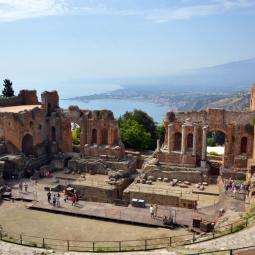
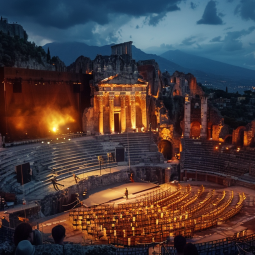
The Ancient Greek Theatre remains Taormina’s most iconic landmark, an amphitheater built in the 3rd century BC and expanded during the Roman period. Its dramatic position overlooking the sea and Mount Etna makes it one of the most photographed historic sites in Sicily. In 2026, the theatre continues to host concerts, cultural events, and international performances.
Greek Theatre at a Glance
📅 Built: 3rd century BC
👥 Capacity: 5,400 spectators
🏛 Style: Hellenistic structure, Roman expansion
🌋 View: Mount Etna + Ionian Sea
🎭 Events: Concerts, opera, festivals
💡 Tip: Best light at sunrise or sunset
Piazza IX Aprile
Piazza IX Aprile is the central panoramic terrace of Taormina. The stone platform opens onto a wide coastal view, while the Church of San Giuseppe and the Clock Tower frame the architectural scene. In 2026, it remains one of the best places to enjoy sunrise and sunset over the Ionian Sea.
Piazza IX Aprile Overview
📍 Location: Central terrace above the Ionian Sea
⛪ Landmarks: San Giuseppe Church, Clock Tower
🌅 View: Coastline + Mount Etna ridge
👣 Access: Direct walk from Corso Umberto
💡 Best Time: Late afternoon
Corso Umberto
Corso Umberto is the main pedestrian artery of Taormina, stretching from Porta Messina to Porta Catania. The street features historical palaces, medieval arches, boutique shops, cafés, and elegant terraces. Its lively atmosphere makes it the social and architectural core of the town.
Corso Umberto Essentials
🏛 Style: Medieval + Baroque + 19th-century façades
🛍 Features: Shops, cafés, artisan boutiques
🚶 Route: Porta Messina → Porta Catania
📸 Photo Spots: Porta Messina arch, side alleys
💡 Tip: Walk early in the morning to avoid crowds
Villa Comunale Gardens
Villa Comunale is one of Taormina’s quietest and most scenic green areas, originally designed by the English aristocrat Lady Florence Trevelyan. The gardens offer Mediterranean vegetation, exotic plants, ornamental Victorian-style towers, and wide coastal views.
Villa Comunale Highlights
🌿 Botanic Setting: Mediterranean + exotic species
📍 Location: Below Corso Umberto
🌊 View: Giardini Naxos Bay
👣 Paths: Shaded and easily walkable
💡 Tip: Ideal during hot summer hours
Madonna della Rocca
This cliffside sanctuary, positioned high above Taormina, offers one of the strongest panoramic viewpoints in the area. The small church carved into the rock creates a unique atmosphere, with sweeping views of the Greek Theatre, the sea, and Mount Etna.
Madonna della Rocca Overview
⛪ Type: Cliffside sanctuary
📍 Elevation: Above Taormina’s upper ridge
🌋 View: Etna, Greek Theatre, coastline
🥾 Access: Via Salita Castello or stepped trails
💡 Tip: Best visibility in early morning
Palazzo Corvaja
Palazzo Corvaja is a medieval complex combining Arab, Norman, Gothic, and Catalan architectural elements. It hosts cultural exhibitions and features an elegant inner courtyard that preserves its historic charm.
Palazzo Corvaja Facts
🏛 Architecture: Arab-Norman-Gothic
📅 Dating: 10th–15th century
🎨 Use: Exhibitions + cultural events
📍 Location: Near Porta Messina
💡 Tip: Visit the inner courtyard
Beaches of Taormina: What to Expect in 2026
Taormina’s coastline combines pebble coves, marine reserves, crystal-clear waters, and steep slopes descending toward the Ionian Sea. Each beach offers a different atmosphere, from protected natural settings to accessible bays with nearby services. In 2026, beach access remains highly dependent on location, tides, and crowd levels.
Isola Bella Beach marine park
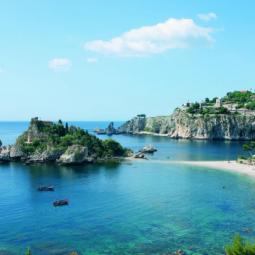
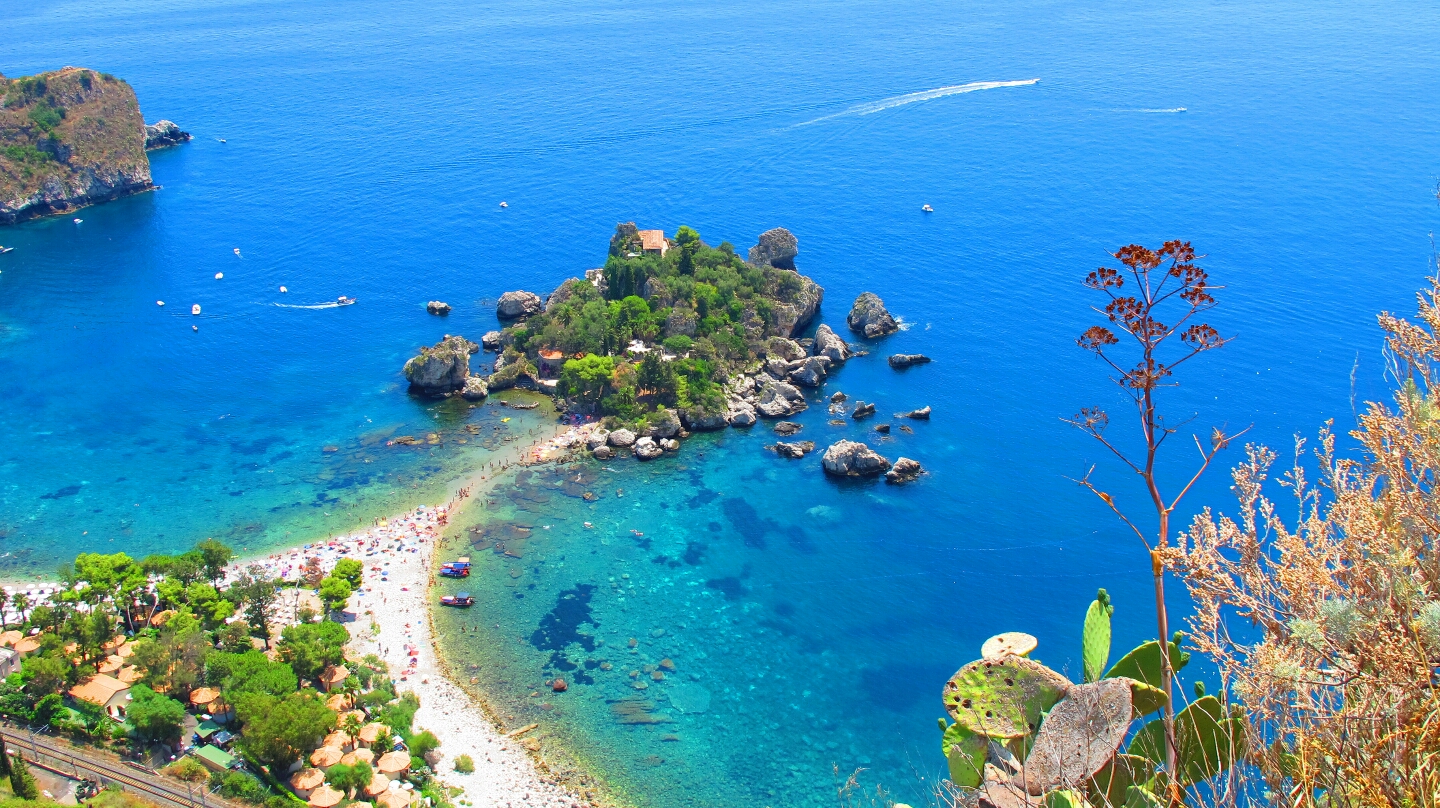
Isola Bella is Taormina’s most iconic beach, located within a protected marine reserve. Known for its narrow pebble shoreline and a small island connected by a natural sandbar, the area offers outstanding water clarity and rich marine life.
Isola Bella Beach Overview
🏝 Type: Protected pebble cove
🌊 Water: Crystal-clear, great for snorkeling
🌿 Setting: Marine reserve + rocky seabed
👣 Access: Cable car → short walk
💡 Tip: Visit early to avoid peak crowds
Mazzarò Beach

Mazzarò lies just below the cable car station and is one of the most accessible beaches from Taormina. It features pebbles, deep water close to shore, and several spots suitable for swimming.
Mazzarò Beach Essentials
🏖 Style: Small bay with pebbles
🚡 Access: Directly from cable car
🌊 Water: Deep and clear
📍 Location: Below Taormina’s east side
💡 Tip: Good spot for shaded areas in late afternoon
Spisone and Mazzeo
Spisone and Mazzeo offer wider stretches of coastline and a more relaxed atmosphere compared to the crowded coves of Isola Bella and Mazzarò. These areas are ideal for visitors seeking more space, calmer surroundings, and easier sea entry.
Spisone & Mazzeo Highlights
🌅 Ambience: Quiet + less crowded
🏖 Beach Style: Wider pebbled coastline
🚗 Access: Easier by car
🌊 Water: Gentle entry points
💡 Tip: Ideal for families or longer stays
Giardini Naxos Beaches
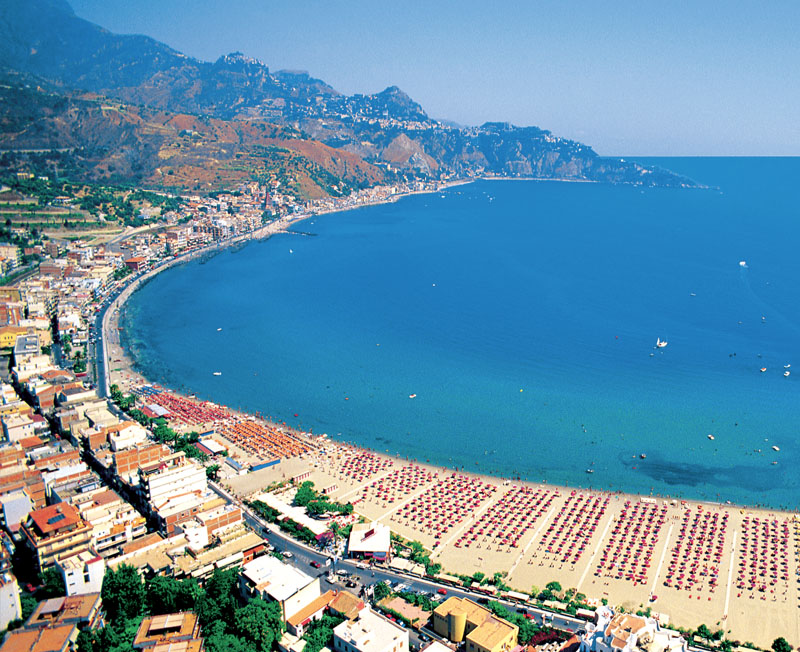
Giardini Naxos is the sandy alternative to Taormina’s pebble coves. It offers long beachfront areas, shallow waters, and a promenade lined with cafés and restaurants. It is especially suitable for families and visitors who prefer easier sea access.
Giardini Naxos Overview
🏖 Beach Type: Long sandy shore
🌊 Water: Shallow, ideal for families
🚶 Promenade: Restaurants + cafés
📍 Location: South of Taormina
💡 Tip: Best for long swimming sessions
How to Move Around Taormina: Transportation, ZTL and Cable Car
Moving around Taormina requires understanding its hilltop geography, limited traffic zones, and mixed transportation network. The town’s historic core is largely pedestrian, while the coastline is reached through the cable car or coastal buses. This section explains how to navigate Taormina efficiently and avoid common mistakes.
Getting Around Taormina 2026
🚫 ZTL: Restricted access in the historic center, camera-controlled
🅿️ Parking: Porta Catania and Lumbi, multi-storey car parks
🚡 Cable Car: Fast link Taormina ↔ Mazzarò
🚌 Buses: Useful for Castelmola and Giardini Naxos
🚶 Walking: Best way inside the old town
💡 Tip: Plan parking before entering Taormina
ZTL Zones: Where You Can and Cannot Drive
Taormina enforces a strict ZTL (Limited Traffic Zone) to protect its narrow historic center. Only residents, hotel transfers, and authorized vehicles may enter the central core between Porta Messina and Porta Catania. Cameras monitor each access point, and fines apply automatically to non-authorized cars.
Corso Umberto is fully pedestrian. Side roads such as Via Teatro Greco and portions of Via Roma remain highly restricted. Visitors should avoid attempting to enter the old town by car. Planning where to park before arrival prevents accidental ZTL violations.
Parking Areas Porta Catania and Lumbi (with logistics)
Taormina offers two main multi-level parking structures positioned at opposite ends of the historic center. Porta Catania Parking, located near the western gate, provides elevator access directly to Corso Umberto. It is ideal for reaching the heart of the old town on foot.
Lumbi Parking lies on the eastern side and is best for visitors arriving from the A18 motorway. A frequent shuttle connects Lumbi with Porta Messina, simplifying access to the pedestrian zone. Both car parks are recommended for long stays, providing safe and practical alternatives to restricted central streets.
The Cable Car System (Taormina ↔ Mazzarò)
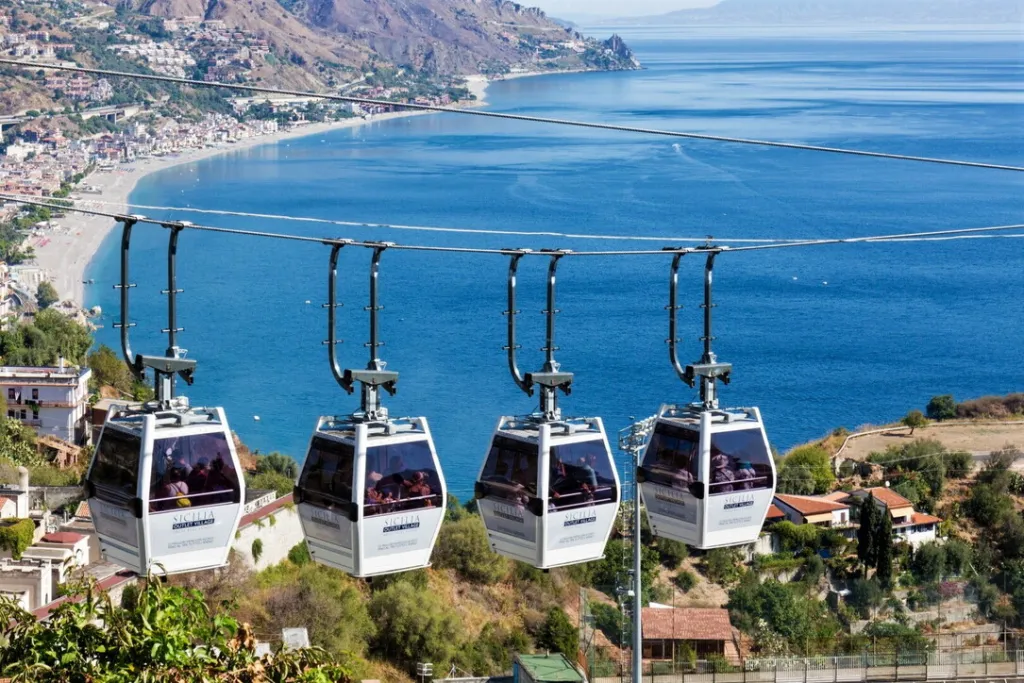
The Taormina–Mazzarò cable car is the most efficient connection between the hilltop center and the coastline. It covers a steep 200-meter elevation drop in just a few minutes. The upper station sits near Porta Messina, while the lower station lies next to Mazzarò and Isola Bella.
Trains run frequently throughout the day. The ride offers panoramic scenery over the bay, making it both practical and scenic. For beach visits or coastal access, the cable car remains the fastest option.
Local Buses and How They Work
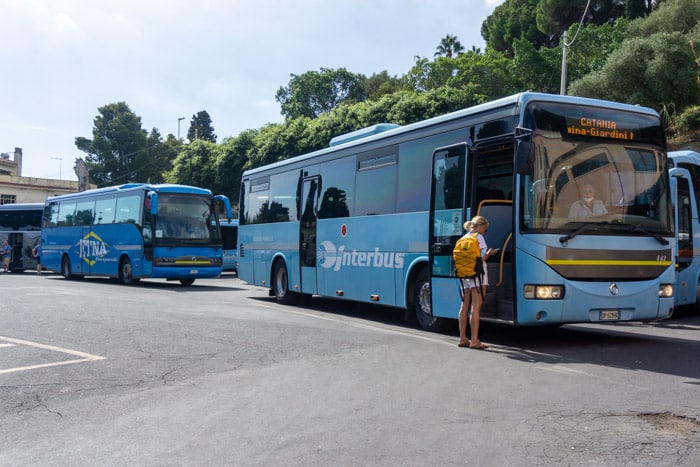
Local buses connect Taormina with Castelmola, Giardini Naxos, Mazzarò, and other surrounding districts. Interbus operates most routes, and schedules increase during high season. Bus stops are clearly marked, and routes are short due to the compact geography.
Buses help visitors avoid steep climbs and provide convenient access to beaches and nearby towns. They are especially useful when returning from coastal areas during hot summer days.
Walking Routes Between Landmarks
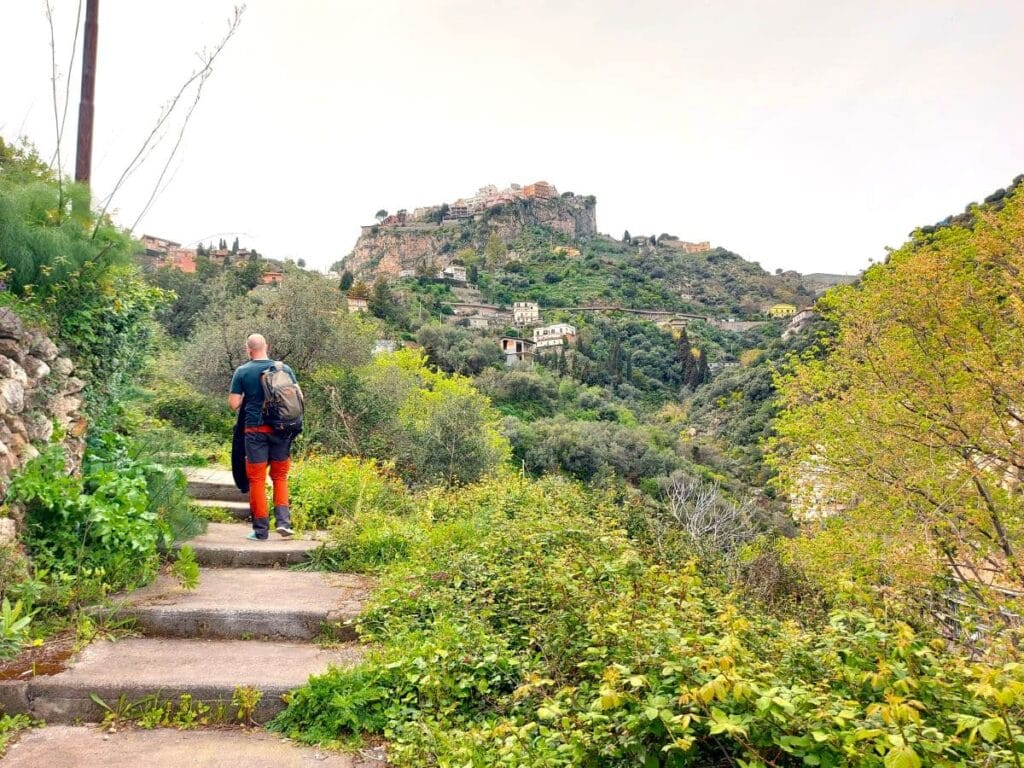
Walking is the most enjoyable way to explore Taormina’s historic center. Corso Umberto forms the main pedestrian axis, linking the town’s two gates. From here, narrow lanes lead to terraces, viewpoints, and archaeological sites.
The walk from the Greek Theatre to Piazza IX Aprile takes only a few minutes. The route to Villa Comunale offers shaded gardens and broad sea views. Trails leading to Madonna della Rocca and Castelmola are steeper but reward visitors with exceptional panoramas.
How to Reach Taormina: By Car, Train, Bus and Airport Transfers
Taormina is well connected to the main transportation routes of eastern Sicily. Most visitors arrive through Catania Airport before continuing by car, bus, train, or private transfer. Understanding each option helps plan a smooth arrival in 2026.
From Catania Airport (2026 Update)
Catania Fontanarossa Airport is the closest international gateway, located about 55 kilometers from Taormina. Travelers can reach the town using shuttle buses, private transfers, or rental cars. Services operate frequently throughout the day, and travel times vary depending on traffic.
Reaching Taormina requires heading north on the A18 motorway. The airport remains the most convenient entry point for long-haul visitors and those arriving from major European hubs.
Train Travel: Perks and Limitations
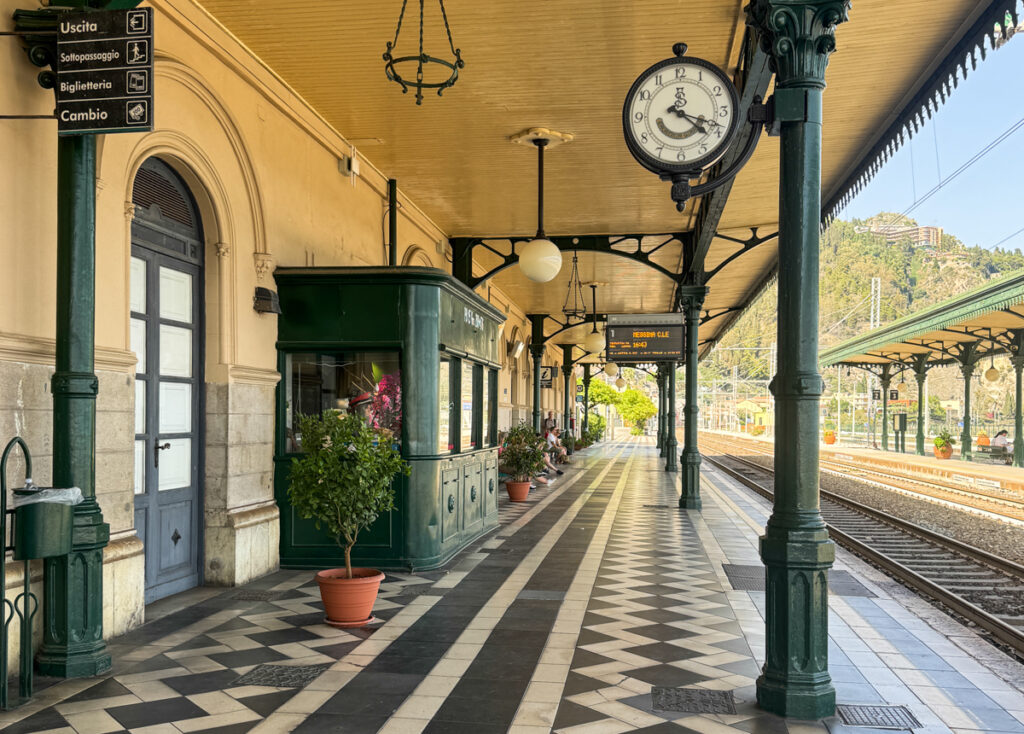
The Giardini Naxos–Taormina railway station sits along the coastline, below the hilltop center. Trains from Catania, Messina, and Syracuse stop here frequently. The main advantage is a scenic coastal ride and predictable schedules.
The limitation is elevation: the station is far below the town. Travelers must continue by shuttle, taxi, or bus. The uphill route is steep, making walking impractical with luggage.
Driving Along the A18 Motorway
The A18 motorway connects Catania to Messina, running parallel to the coastline. Exits for Taormina are clearly marked. Driving offers flexibility and is ideal for those planning day trips to Etna, Alcantara, or inland towns.
The main challenge is Taormina’s steep access roads and strict ZTL zones. Visitors should park at Lumbi or Porta Catania before entering the pedestrian area. Planning navigation in advance is essential to avoid restricted areas.
Shuttle Services and Airport Transfers
Airport shuttles and transfers offer a direct, comfortable connection between Catania Airport and Taormina. These services follow the A18 motorway and stop near Porta Messina or Porta Catania. They remain the simplest option for visitors with heavy luggage or late-night arrivals.
Unlike trains, shuttles avoid coastal delays and elevation challenges. Travel times are consistent, especially outside peak traffic hours.
Best Arrival Method Depending on Traveler Type
Each transportation option suits different needs. Choosing the right method depends on luggage, arrival time, and the level of comfort you expect.
Best Arrival Method by Traveler Type
👨👩👧 Families: Shuttle or private transfer for simplicity and minimal transfers
💑 Couples: Train for scenic coastal views and relaxed travel
🚗 Road Trip Travelers: Rental car via A18 for maximum flexibility
💸 Budget Visitors: Intercity buses from Catania or Messina for lower costs
🧳 General Tip: Consider luggage weight and elevation when arriving in Taormina
Where to Find the Best Views: Scenic Spots and Panoramic Walks
Taormina offers some of the most spectacular viewpoints in eastern Sicily. Its elevated position on Monte Tauro creates natural terraces facing the coastline, Mount Etna, and the surrounding hills. These locations are ideal for photography, sunrise views, and evening walks.
Belvedere di Via Pirandello
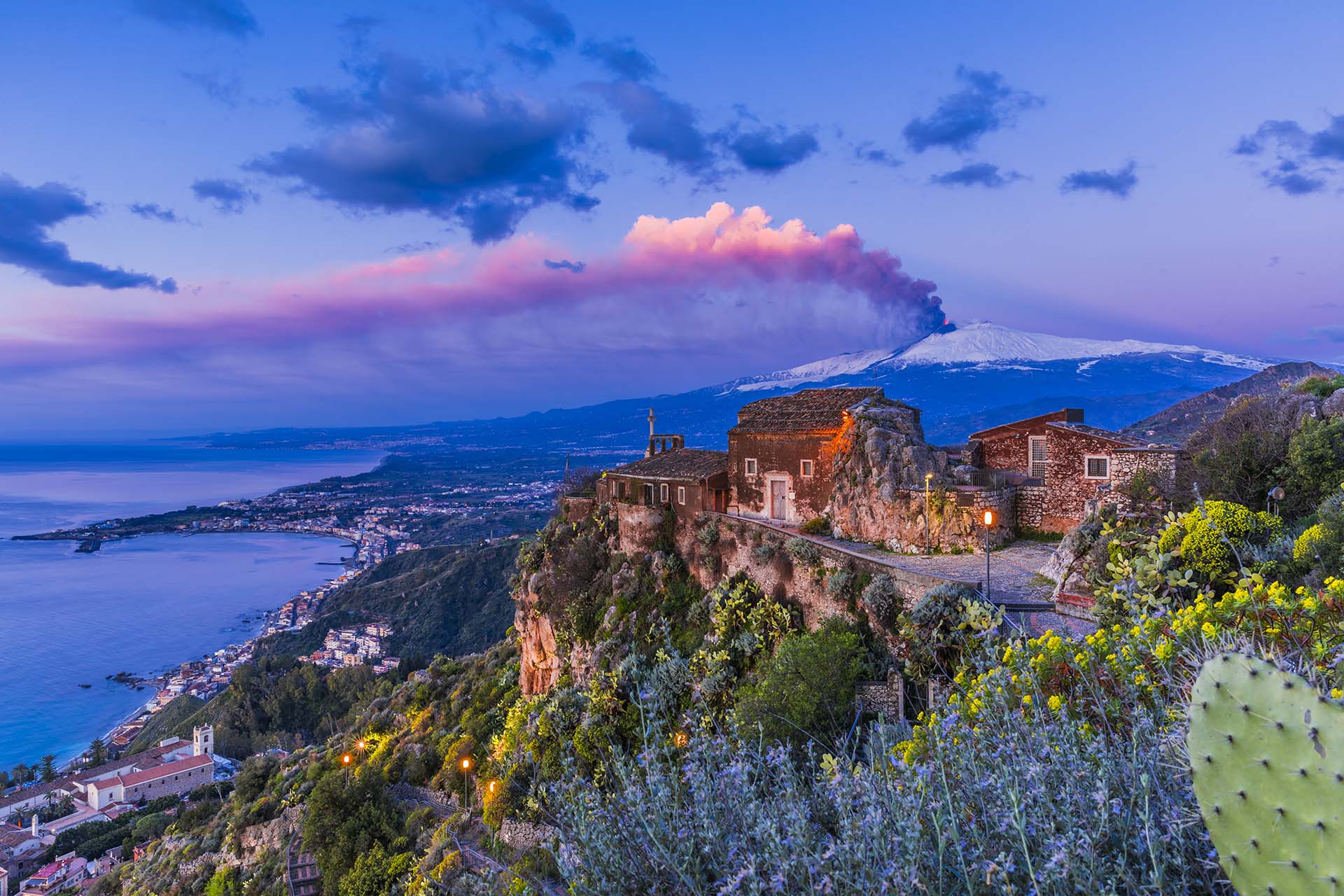
Belvedere di Via Pirandello is one of Taormina’s most accessible and rewarding panoramic points. It sits near the northern entrance to the town and overlooks Mazzarò, Isola Bella, and the surrounding cliffs.
Belvedere di Via Pirandello
📍 Location: Near Porta Messina
🌊 View: Mazzarò + Isola Bella
🚶 Access: Short walk from Corso Umberto
📸 Best For: Sunrise photography
💡 Tip: Visit before 10 AM for ideal lighting
Greek Theatre Viewpoints
The Greek Theatre offers sweeping views of the Ionian Sea and Mount Etna. Multiple terraces inside the structure provide different angles, making it one of the most photogenic locations in Taormina.
Greek Theatre Viewpoints
🌋 View: Mount Etna + coastline
🏛 Setting: Inside the ancient theatre
📸 Best Spots: Upper terraces + stage corridor
🌅 Light: Late afternoon for warm tones
💡 Tip: Arrive early to avoid crowds
Madonna della Rocca Terrace
The terrace at Madonna della Rocca sits above the town and provides a powerful vantage point overlooking Taormina, the Greek Theatre, and the coastline. The elevation makes it ideal for panoramic photography.
Madonna della Rocca Terrace
⛪ Location: Cliffside above Taormina
🌋 View: Etna + Teatro Greco + coast
🥾 Access: Steep walking trail
🌤 Best Time: Morning for clear skies
💡 Tip: Bring water during summer climbs
Castelmola Panoramic Squares
Castelmola, located above Taormina, offers several squares with extraordinary views of Mount Etna and the Ionian Sea. Its elevated position provides some of the clearest viewpoints in the region.
Castelmola Panoramic Points
🏞 Location: Hilltop village above Taormina
🌋 View: Etna + Ionian coastline
🚗 Access: Bus or car, short ride
📸 Best Spots: Piazza Sant’Antonio
💡 Tip: Visit near sunset for golden light
Coastal Lookouts Toward Giardini Naxos
The coastline surrounding Taormina reveals multiple natural terraces facing Giardini Naxos Bay. These spots provide wide-angle views of the sea and distant mountains, especially beautiful during sunset.
Giardini Naxos Viewpoints
🌊 View: Bay of Giardini Naxos
📍 Location: Coastal road + terraces
🚗 Access: Easy by car or bus
🌅 Best Time: Sunset
💡 Tip: Ideal spot for panoramic photography lovers
Food in Taormina: What to Eat and What’s Trending in 2026
Taormina’s culinary identity reflects the diversity of eastern Sicily. Dishes combine coastal seafood traditions, Etna’s volcanic agriculture, and centuries-old influences from Greek, Arab, and Norman cultures. In 2026, food trends emphasize authenticity, local sourcing, and seasonal ingredients.
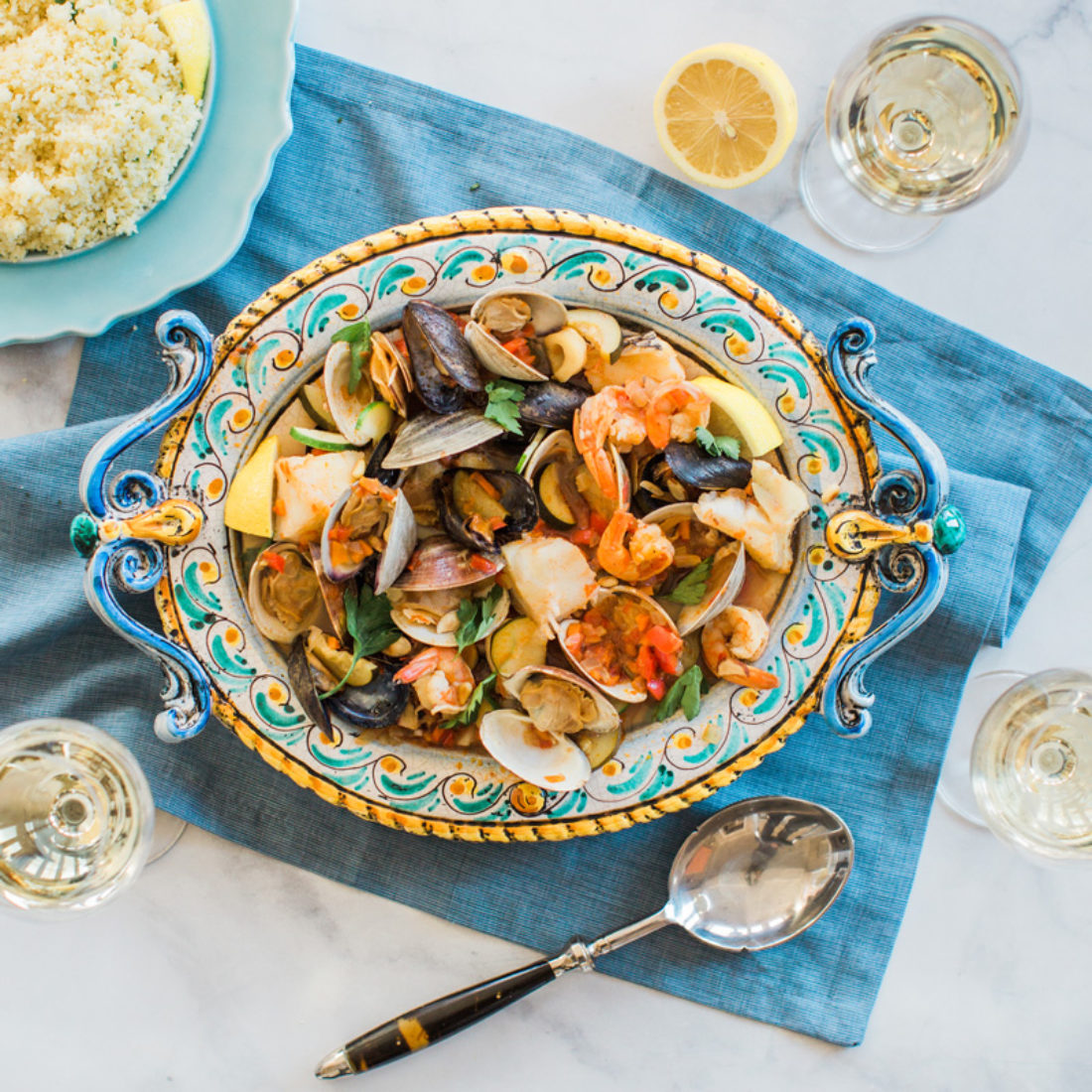
Sicilian Classics: Arancini, Pasta alla Norma, Granita
Traditional Sicilian dishes remain essential to Taormina’s dining scene. Arancini, pasta alla norma, and granita with brioche are widely available and represent the region’s culinary heritage.
Sicilian Classics
🍊 Granita: Almond, lemon, mulberry — served with brioche
🍆 Pasta alla Norma: Tomato, basil, eggplant, ricotta salata
🍚 Arancini: Rice filled with ragù, pistachio, or cheese
🥖 Street Food: Quick, traditional, easy to find
💡 Tip: Try granita early morning for best freshness
Seafood Dishes of the Ionian Coast
Taormina’s proximity to the Ionian Sea ensures a steady supply of fresh seafood. Local menus highlight swordfish, grilled calamari, anchovies, and shellfish. Dishes often feature citrus, herbs, and olive oil typical of the region.
Ionian Seafood Highlights
🐟 Swordfish: Grilled or alla ghiotta
🦑 Calamari: Fresh, lightly grilled
🦐 Shrimp: Local red or pink varieties
🌿 Flavors: Lemon, oregano, olive oil
💡 Tip: Try seafood at lunch for peak freshness
Slow Food, Local Wines and Etna DOC Culture
Eastern Sicily’s volcanic soil supports rich agricultural traditions. Taormina’s wine lists often feature Etna Rosso, Etna Bianco, and sparkling wines from high-altitude vineyards. Slow Food practices promote small producers, seasonal ingredients, and native grape varieties.
Etna & Slow Food Highlights
🍷 Etna Wines: Nerello Mascalese, Carricante
🌋 Soil: Volcanic minerals enrich aromas
🌱 Slow Food: Local producers + seasonal menus
🧀 Specialties: Pecorino, capers, citrus products
💡 Tip: Ask for wines from Etna’s north slope
Gelato and Pastry Traditions
Gelato and pastries in Taormina follow long-standing Sicilian traditions. Ricotta-based desserts, citrus cakes, and almond pastries reflect the island’s culinary heritage. Many cafés offer homemade gelato using local flavors such as pistachio, citrus, and almond.
Sicilian Desserts
🍨 Gelato: Pistachio, almond, lemon
🥮 Ricotta Cakes: Cannoli + cassatelle
🍋 Citrus: Lemon and orange pastries
🌰 Nuts: Almonds and pistachios
💡 Tip: Choose artisanal gelato for stronger flavors
Food Experiences Connected to Etna’s Volcanic Soil
Etna’s volcanic environment influences local agriculture. Produce grown on the slopes benefits from mineral-rich soils, resulting in intense flavors and distinctive aromas. These ingredients often appear in Taormina’s seasonal menus.
Volcanic Food Culture
🌋 Soil: High mineral content
🍇 Produce: Grapes, citrus, wild herbs
🥔 Specialties: Potatoes, chestnuts
🍷 Wine: Etna Rosso + Etna Bianco
💡 Tip: Try dishes labeled “Etna origin”
Day Trips from Taormina: The 2026 Shortlist
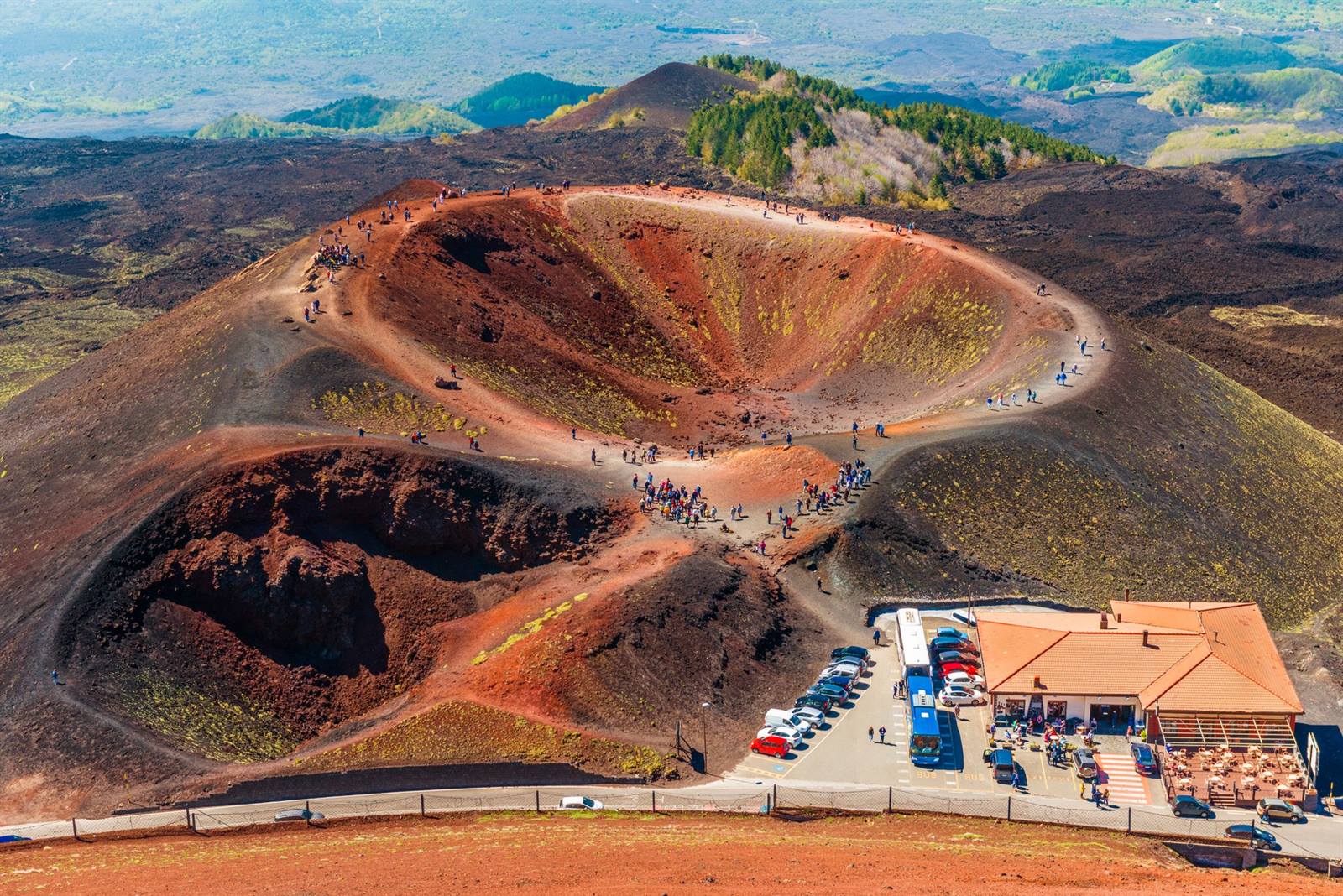
Mount Etna: Routes, Landscapes and Access
Mount Etna is the most significant natural landmark near Taormina. The volcano offers routes through forests, craters, lava fields, and high-altitude plateaus. Its unique landscapes result from centuries of eruptions and volcanic activity.
Travelers can reach the volcano’s north and south sides by car or public connections. Weather changes quickly at higher elevations, so planning conditions before departure is essential.
Mount Etna Highlights
🌋 Feature: Active stratovolcano
⛰ Elevation: 3,357 m
🌿 Landscapes: Forests, lava flows, craters
🚗 Access: North or south slopes
💡 Tip: Check weather before departure
Alcantara Gorges
The Alcantara Gorges are basalt canyons shaped by ancient lava flows cooled by river water. The narrow rock walls and crystal-clear pools make this site one of the most distinctive geological attractions near Taormina.
Visitors can walk along the riverbank, explore the canyon floor, or observe the hexagonal basalt columns from panoramic terraces.
Alcantara Gorge Facts
🪨 Geology: Basalt columns shaped by lava
💧 Water: Clear, cold river pools
🥾 Activity: Walking, river exploration
📍 Location: North of Taormina
💡 Tip: Wear water shoes for rocky areas
Castelmola
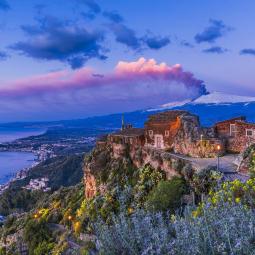
Castelmola is a medieval hilltop village overlooking Taormina. The town’s panoramic squares offer exceptional views of Mount Etna and the Ionian Sea. Narrow lanes, stone arches, and traditional cafés outline the historic center.
Castelmola Overview
🏞 Style: Medieval hilltop village
🌋 View: Etna + coastline
🚗 Access: Short bus or car ride
📸 Best Spot: Piazza Sant’Antonio
💡 Tip: Visit at sunset for warm colors
Savoca and Forza d’Agrò
Savoca and Forza d’Agrò are two medieval towns famous for their traditional architecture and their connection to The Godfather film locations. Both villages feature narrow lanes, panoramic terraces, and quiet historical streets.
Savoca & Forza d’Agrò
🏘 Style: Medieval villages
🎥 Notable: Film locations
🌅 View: Hills + coastline
🚗 Access: Inland road from Taormina
💡 Tip: Visit both in a single loop
Catania
Catania is a dynamic Baroque city located south of Taormina. Its historic center combines piazzas, street markets, and architecture built with black volcanic stone. It offers a strong contrast to Taormina’s hilltop atmosphere.
Catania Essentials
🏛 Architecture: Baroque + lava-stone buildings
🦐 Markets: Famous fish market
📍 Distance: South of Taormina
🎭 Culture: Theatres + local events
💡 Tip: Explore Via Etnea for landmarks
Messina
Messina is the main gateway to the northern part of eastern Sicily. Its harbor, cathedral, and astronomical clock offer a mix of historical interest and coastal scenery.
Messina Highlights
⛪ Landmark: Cathedral + bell tower
⚓ Harbor: Natural port
📍 Location: North of Taormina
🌁 View: Strait of Messina
💡 Tip: See the noon clock show
Outdoor Activities Near Taormina for 2026 Travelers
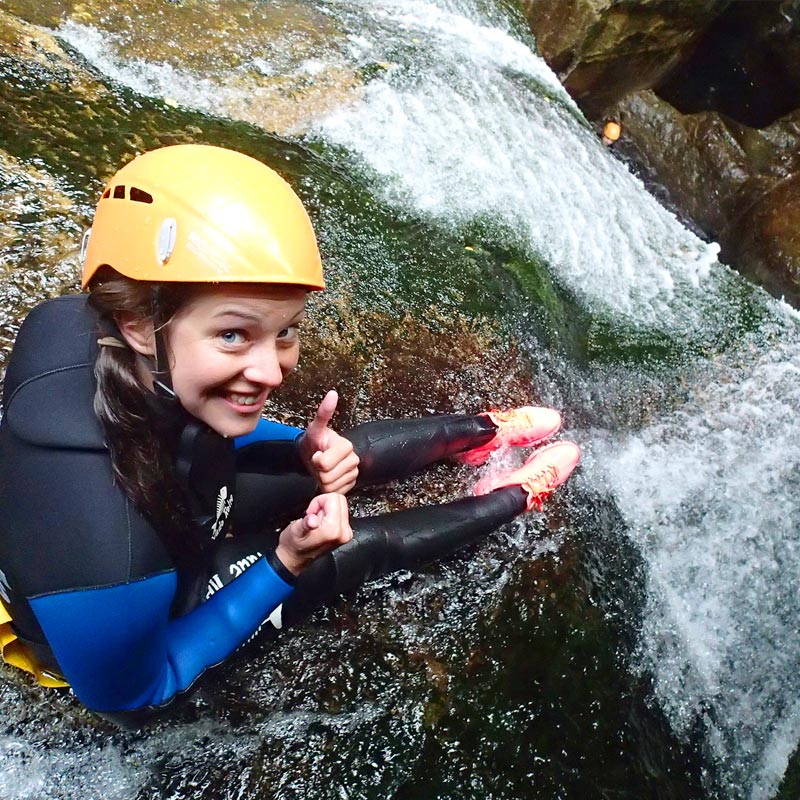
Taormina’s surroundings offer a wide range of outdoor experiences, thanks to a landscape shaped by cliffs, forests, marine reserves, and volcanic terrain. These activities appeal to hikers, swimmers, nature lovers, and visitors seeking immersive adventure without leaving the region.
Hiking Trails Near Taormina
Several panoramic trails begin directly from Taormina and nearby villages. Routes lead toward Madonna della Rocca, Castelmola, and foothill paths offering extensive coastal views. The terrain varies from paved steps to rocky footpaths.
Hiking Near Taormina
🥾 Difficulty: Easy to moderate
🌄 Views: Coastline + Mount Etna
📍 Routes: Castelmola, Madonna della Rocca
🌤 Best Time: Morning or late afternoon
💡 Tip: Bring water during summer months
Snorkeling and Marine Life Around Isola Bella
Isola Bella’s marine reserve offers calm, clear waters ideal for snorkeling. The rocky seabed shelters small fish, octopus habitats, and underwater formations shaped by ancient volcanic activity.
Snorkeling Around Isola Bella
🤿 Best Spots: Around Isola Bella islet
🌊 Water: Clear, calm, good visibility
🪨 Seabed: Rocks + small caves
🐟 Marine Life: Fish, urchins, crustaceans
💡 Tip: Water shoes recommended
Body Rafting & River Trekking at the Alcantara Gorges
The Alcantara Gorges offer a unique natural setting for river-based activities. Their basalt walls and cold waters create an environment ideal for body rafting and light river trekking. These activities depend on water levels and seasonal accessibility.
Alcantara Outdoor Activities
🪨 Setting: Basalt canyon
💧 Water: Cold, clear river pools
🥽 Gear: Helmet + water shoes recommended
🥾 Activity Type: River trekking
💡 Tip: Best during warm months
Cycling Routes Toward Etna
Cycling routes near Taormina include coastal roads and mountain climbs leading toward Mount Etna’s foothills. The terrain varies from gentle seafront stretches to demanding ascents through wooded areas.
Cycling Near Taormina
🚴 Routes: Coastal + Etna foothills
🌋 Scenery: Lava fields + forests
📍 Starting Points: Taormina, Giardini Naxos
🌡 Best Season: Spring or autumn
💡 Tip: Start early to avoid heat
Scenic Walks Toward Castelmola
The walk from Taormina to Castelmola is one of the most scenic paths in the region. It climbs through stairways and hillside trails, offering constant panoramic views of the Ionian Sea and Mount Etna.
Scenic Walk to Castelmola
🥾 Path Type: Steps + hillside trail
🌅 View: Etna + coastline
📍 Distance: Short but steep
🏞 Highlight: Stone terraces
When to Visit Taormina: Weather, Crowds and Seasonal Highlights

Taormina’s climate allows year-round travel, but each season offers a different experience. Weather patterns, sea temperatures, and crowd levels determine the best time to visit depending on your preferences.
Month-by-Month Climate Overview
Taormina experiences a Mediterranean climate with mild winters, warm springs, hot summers, and pleasant autumns. Rainfall is limited, mostly concentrated between November and February.
Taormina Climate 2026
🌸 Spring (Mar–May): Mild temperatures, blooming landscapes
☀️ Summer (Jun–Aug): Hot, very dry, peak season
🍁 Autumn (Sep–Nov): Warm sea, comfortable weather
❄️ Winter (Dec–Feb): Mild temperatures, occasional rain
💡 Tip: Spring and autumn provide ideal balance
High Season vs Shoulder Season vs Low Season
Crowd levels vary significantly throughout the year. Summer attracts the largest number of visitors, while winter offers a quieter experience.
Visitor Seasons in Taormina
👥 High Season: June–August, busiest months
🌤 Shoulder Season: April–May, September–October
🌧 Low Season: November–March
📸 Best For: Photography and quiet exploration in winter
💡 Tip: Book early if visiting in summer
Sea Temperatures in 2026
Sea conditions influence beach visits. Temperatures peak in late summer and remain comfortable until mid-autumn. Early spring often brings cooler waters.
Taormina Sea Temperatures
🌊 May: Cool but swimmable
🏖 June–August: Warmest water
🍂 September–October: Excellent conditions
❄️ Winter: Cold, not ideal for swimming
💡 Tip: Late September offers warm water and fewer crowds
Festivals and Annual Events
Taormina hosts several cultural events throughout the year, including film festivals, concerts, and religious celebrations. These events influence crowd levels and accommodation availability.
Taormina Events Calendar
🎬 Taormina Film Festival: Early summer
🎭 Greek Theatre Concerts: Summer evenings
⛪ Religious Festivals: Throughout the year
🎨 Cultural Exhibitions: Seasonal programs
💡 Tip: Check schedules before planning
Practical Tips for 2026 Visitors
Taormina offers a comfortable travel experience, but its hilltop setting, pedestrian streets, and seasonal climate require some preparation. These practical tips help visitors enjoy a smooth stay in 2026.
Safety and Terrain Considerations
The historic center includes steep lanes, stone stairways, and uneven surfaces. While Taormina is generally safe, caution is recommended during rain or evening walks.
Safety Tips in Taormina
⚠️ Terrain: Steps, slopes, uneven stones
🌙 Lighting: Some alleys are dim
🥾 Footwear: Comfortable shoes recommended
🚶 Crowds: Heaviest in summer
💡 Tip: Avoid steep trails after rain
Dress Code and Weather Changes
Due to its elevation and exposure to coastal breezes, Taormina experiences quick temperature shifts. Summer is hot, while evenings in spring and autumn can feel cool.
Clothing Advice
👕 Summer: Light, breathable fabrics
🧥 Spring/Autumn: Light layers
🌧 Rain: Winter showers possible
🌞 Sun: Strong UV midday
💡 Tip: Carry a layer for evenings
Money, Payments and Tipping
Credit cards are widely accepted throughout Taormina. Small cash amounts remain useful for cafés, kiosks, and minor purchases. Tipping is appreciated but not obligatory.
Payment Essentials
💳 Cards: Commonly accepted
💶 Cash: Useful for small expenses
🏧 ATMs: Near Porta Messina
💁 Tipping: Optional
💡 Tip: Carry small denominations
Avoiding Crowds and Heat
Taormina gets busiest during summer midday hours. Morning and late afternoon offer cooler temperatures and quieter streets.
Avoiding Crowds
🌞 Best Time: Early morning
🌙 Evening: Pleasant strolls
🚫 Avoid: Noon in July–August
🏞 Quiet Spots: Villa Comunale Gardens
💡 Tip: Visit landmarks at opening time
Photography and Drone Rules
Taormina offers scenic photography opportunities, but drone use is restricted in the historic center and protected natural areas such as Isola Bella.
Photography Rules
📸 Allowed: Standard photography
🚫 Drones: Restricted in center
⚖️ Regulations: Apply in marine reserve
🌤 Best Light: Sunrise or sunset
💡 Tip: Use high terraces for panoramas
Frequently Asked Questions About Taormina (2026 Edition)
1. How many days do you need in Taormina?
Most travelers need 2–3 days to see the main sights.
Add 1 day for Mount Etna or Alcantara Gorges.
2. Is Taormina expensive in 2026?
Yes, Taormina is one of Sicily’s more upscale destinations.
Prices are higher in summer.
Better value in April–May and September–October.
3. Can you visit Mount Etna from Taormina without a car?
Yes
You can reach Etna using organized transfers.
Check schedules and weather before departure.
4. Is Taormina walkable?
Yes.
The historic center is fully walkable, but expect steps, slopes, and narrow lanes.
5. Taormina or Giardini Naxos — which one to choose?
Choose Taormina for culture, views, and history.
Choose Giardini Naxos for sandy beaches and lower prices.
6. What is the best month to visit Taormina?
The best months are May, June, September, and October.
7. How do you get from Catania Airport to Taormina?
By shuttle bus, private transfer, train, or car.
8. Does Taormina have a beach?
Yes.
Main beaches include Isola Bella, Mazzarò, and Spisone.
9. Is Taormina suitable for families?
Yes.
Beaches, pedestrian streets, and panoramic walks make it family-friendly.
10. Can you visit Taormina on a day trip?
Yes, but staying overnight allows you to enjoy sunset and evening atmosphere.
Conclusion
Taormina remains one of the most distinctive destinations in the Mediterranean, offering a balance of culture, landscape, and coastal beauty. Its ancient theatre, panoramic terraces, beaches, and surrounding natural areas create a diverse travel experience suitable for many types of visitors. Planning around seasons, understanding transport options, and exploring the nearby regions enrich the journey and reveal the full character of eastern Sicily.
This guide provides essential insights for navigating Taormina in 2026, helping visitors understand its geography, highlights, and practical considerations. Whether you are exploring historic streets, relaxing by the sea, or discovering the landscapes around Mount Etna and the Alcantara Valley, Taormina offers memorable experiences shaped by history,